Підручник Англійська мова 8 клас - Калініна Л.В. - Генеза 2016 рік
Unit 2: Live and Learn
2.4. School Routine
Word Bank |
Phrase Bank |
• tolerance |
• to arouse one’s interest |
• staff |
• from the horse’s mouth • one thing is certain • to be based on something • to treat sb firmly • mutual respect |
Communication Box: How to ask for more information
• Do you happen to know…? • Could you get me…? • Have you a spare minute? I just want ed to … • How about … and then … • It’s just that … is arousing interest • No one minds about that sort of thing. • I’m not sure about … but … • There’s no end to your questions. How about … • Well, I’m not an expert, but … |
• What’s that you are…? • Well, let’s see what I can come up with … • How cool is that? Your … is great • Don’t tell me you find it in teresting! • I can’t believe this … you are… • I’ll try to do my best. |
I. Now for it!
Read what different pupils like or dislike about their school life and have your say.

Wendy
I must say that I like school very much. I like all the subjects, except chemistry. I’ve never been good at it. I enjoy working in the library, making displays of books. I think I’ll become a librarian in future.

Andy
I confess I don’t like to get up very early on week days, but I like coming to school to see my friends. We take sports after lessons and learn how to play basketball well. It’s a lot of fun.

Peter
I really like my English classes. They are incredible! I can see how all of us are making progress in it. I like to communicate in English, to pick up new words and phrases. It’s great!

Ann
I enjoy my literature classes. You have to understand the writers’ vision of the time, the characters’ sayings and doings. My teacher is really great! She knows so much and inspires us so greatly!
Example: I personally think that school is a place both for learning and socializing. I especially enjoy learning in a fun way when teachers engage me in using my gadgets and doing something new with them.
I. Reading
a) Ann is talking to her friend, a former exchange student Helen, asking her for more information about schooling in Britain. Read the conversation and say what has aroused Ann’s interest.
Talking about School Routine
Ann: I say, Helen, do you think you have some spare time for telling me more about British schools? I’m writing a report and the information from the horse’s mouth will be very suitable.
Helen: What’s that you are interested in?
Ann: I wonder what was the structure of a usual working day at the school where you studied.
Helen: Well, morning registration at 8:50 a. m. Then come five lessons each morning with a 20-minute break. After the first three we usually had lunch- break at about 1 p.m. and after that after-school activities. As far as I remember, last lesson was over at 4 p.m.
Ann: Fine. And can you give the idea of Saturday’s working schedule? Does it differ much from everyday routine?
Helen: Oh, I’m not sure about it because we had trips to local places of interest every weekend. But one thing is certain - there are no lessons, all pupils are involved in sports, music, drama or other activities.
Ann: And you? What sport activity did you take part in?
Helen: Don’t tell me you are interested in sport. You’ve never been!
Ann: It’s just that typical British sports are arousing my interest.
Helen: All students choose a sport they take delight in. The boys can take up football or rugby, the girls - cricket, tennis or athletics. All sports are available in my school in Ukraine.
Ann: I see. And one more question: could you describe what the atmosphere was like in that school?
Helen: Generally, it was reasonably relaxed and friendly, because it was based on tolerance and mutual respect. Poor behaviour, especially bullying, was treated very firmly. I guess relations between pupils and staff are excellent.
Ann: And then another question arises…
Helen: Oh, there’s no end to your questions. How about having a cup of tea and then we may continue.
Ann: Thank you. No one minds that sort of thing.
Helen: Agreed, then.

Across cultures: Great Britain, Ukraine rugby - a type of football in which the ball can be handled, played with an oval (egg-shaped) ball by two teams of either 13 players (professional) or 15 players (non-professional).
cricket - an outdoor game, popular in Britain, played in summer with a small ball covered with red leather, a bat, and wickets, by two teams of 11 players each, usually dressed all in white.

III. Language Track

1. In the text above, find 10 words in which ’wh’ and ’w’ give the sound /w/ and reproduce them in contexts. Practise saying them in your own context.
Example: /w/ I wonder what was the structure of a usual working day at the school where you studied.
Well, morning registration at 8:50 a. m. Then come five lessons each morning with a 20 minute break.

1. Study the difference in meaning. From the text reproduce the words in the context and interpret their meanings. Make up your own sentences by analogy.
arouse (v) as in arouse interest / expectations etc. — to make you become interested, expect something. |
arise (v) - if something arises from or out of a situation, it is caused or started by that situation. |
Example: This extra-curricular activity has aroused everybody’s interest. |
Example: More behavior problems are sure to arise if you don’t take measures. |
2. In the text above, find words/phrases with the same meanings and reproduce them in context. Add 1-2 logically connected sentences to them which the friends could say.
Example: I’m writing a report about British schools and the information from the horse’s mouth will be very suitable. I’m bursting with questions.
• first-hand information
• extra-curricular activities
• all the teachers of a school
• to be against something
• to go on doing something
• to have free time
3. From the text above, read out words/phrases with which the girls described the atmosphere at school. Use them to describe the atmosphere in your school.

1. In the text above, find the embedded questions and group them into two categories: whether they are in a statement or in a question. Turn them into direct questions.
2. Complete the instructions and give your own examples.
Use embedded questions in…
Don’t put a question mark when…

4. Look at the photos and complete embedded question about school life.

• I wonder … .
• I don’t know … .
• I’d like to find out … .
• Do you understand …?
• Can you tell me …?
• Who knows …?
IV. Communication Track
1. Speaking
1. Speak about an ordinary day at your school. Cover the following points:
• the structure of the day at your school;
• after-school activities pupils take part in;
• the atmosphere at school and relations between the pupils and the staff.
2. Read and learn how to ask for more information. Look at the pictures and fill in the mini-dialogues.
1. It’s just that … is arousing my interest.
- I’m not sure about it, but we can read up.
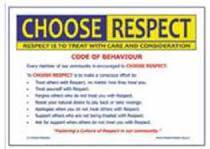
behaviour code
2. Hey … , do you have a spare minute? I just wanted ask you about the … in English school?
- Well, let’s see what I can come up with.

curriculum
3. Do you think you’ve got time for telling me about … in the USA?
- Don’t you tell me you find it interesting?

school traditions
4. Do you happen to know anything about … ?
- How about I tell you something and then you’ll search the Internet?

bullying
5. Can you give me the idea of … ?
- What’s that you are interested in?

School museum
3. In the whole class have a questions-and-answers session about school life in different countries.
2. Listening
a) Before you listen
You are going to listen to the description of after-school activities in American schools. Try to predict its content with the help of these words.
• variety • academic
• active • to compete
• orchestra • trips
b) While you listen
Listen to the description and list the after-school activities mentioned.
c) After you listen
Say which of the activities are similar to those in your school.
3. Writing
a) Before you write
If you want to advertise an after-class activity, write a notice.
• Brainstorm with your friends what information your notice should contain.
• Make up a list of words/phrases you’ll use to attract readers’ attention.
a) While you write
Follow the format of a notice.
How to write a notice
Content Tips |
Language Tips |
• Address the target audience; • In the introduction name the activities being described; • In the main body give some basic information about the activities; • Encourage the readers to contact you. • Sign it and put down the date. |
• Dear parents / friends, • There are many ways in which … • The school will provide … • You may also be invited to … • You may also participate in … • If you would like any information about …, please contact … |

At Home: In your WB, write a notice to advertise an after-class activity.
Перша публікація: 01/01/2016
Останнє оновлення: 31/12/2023
Редакційна та навчальна адаптація: Даний матеріал зведено на основі першоджерела/оригінального тексту. Команда проєкту здійснила редакційне оглядове опрацювання, виправлення технічних неточностей, структурування розділів та адаптацію змісту до навчального формату.
Що було опрацьовано:
- усунення форматних дефектів (OCR-помилки, розриви структури, дефектні символи);
- редакційне упорядкування змісту;
- уніфікація термінів відповідно до академічних джерел;
- перевірка відповідності фактичних тверджень тексту першоджерела.
Усі згадки про автора, рік видання та походження первинного тексту збережено відповідно до джерела.