Підручник Англійська мова 5 клас (1 -й рік навчання) - Т. Г. Пахомова - Методика Паблішинг 2018 рік
Unit 5 Shopping in Greenwich
Language 2/3
Invitations

1. Who is it from?
a) Read the invitation and answer the questions.
Example: What does RSVP mean? - It means ’please answer’.
1. Who is the invitation from?
2. Who does Sam invite to his party?
3. Where is the party?
4. What time is the party?
5. Where does Sam live?
6. Why does Sam write an invitation?
Who?
What?
When?
Where?
Why?
b) What isn't on Sam's invitation? (His address? The date of his party? The time of the party? His name?)
Why … ?
Because … .
2. The months of the year
a) Listen and say the months.
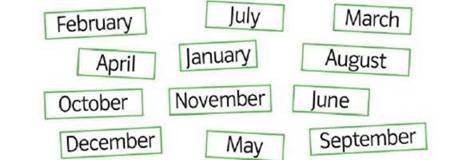
b) Now say the months in the correct order. January, February, … . Go on, please.
3. Let's talk: Days in the month
a) Make a list of the months. How many days are there in the months?
Example: January - 31 days
b) Make a quiz for your partner.
A: It has got thirty-one days. It has got only three letters.
B: That’s May.
A: It has got thirty days. It starts with an ’A’.
B: That’s … .
4. Birthdays
a) Listen and say the numbers.
b) Look at Sam's birthday list. When are the birthdays?
Example: His mum’s birthday is on the twenty-first of May. His dad’s birthday is … . Go on, please.
Mum — 21st May
Dad — 10th December
Grandma — 15th September
Terry — 22nd July
Lisa — 6th November
Emma — 30th January
Me! — 3rd March
You say: on the twenty-first of May
You write: on 21st May
5. What's the date?
Read and say the dates.
Example: Tue., 23.02. - Tuesday, the twenty-third of February.
1. Fri., 30.12.
2. Wed., 11.05.
3. Sun., 04.07.
4. Thu., 20.10.
5. Sat., 15.09.
6. Mon., 31.01.
6. Let's talk: When's your birthday?
a) Ask about birthdays in your group. Make a list.
A: When’s your birthday?
B: It’s on the … of … . When’s your birthday?
C: It’s on the … of … . When’s … ? Go on, please.
b) Do a class survey.
How many pupils have got a birthday in January, … ?
Mon. = Monday
Tue. = Tuesday
Wed. = Wednesday
Thu. = Thursday
Fri. = Friday
Sat. = Saturday
Sun. = Sunday
7. A birthday calendar
Make a birthday calendar for the pupils in your class.
8. For my folder: A party invitation
Make an invitation to a party. Don't forget your name, your address and the time and date of the party. Here are three ideas.
1. Write it as a crossword puzzle.
2. Blow up a balloon and write on it.
3. Use magazine pictures of famous people. They can give the information about the party.

Birthdays are fun
1.
I like my birthday. Grandma and I make a big cake. That's fun. My friends come to our flat and we play games and eat a lot of good things. Grandma helps and my dad always gives me a great CD.
2.
My birthday is in July. This year I want to have a party in the park and play football. My friends love football. Then I want to go to a burger bar with them. But I hope they don't sing "Happy Birthday"!

1. Who says what?
Number 1 is … .
Number 2 is … .
2. Revision: Yes or no?
Example: Does Sam make his cake? - + Yes, he does. / No, he doesn’t.
1. Does Emma make her cake? +
2. Does Sam’s dad give him a CD? -
3. Does Lisa write invitations? +
4. Does Terry want to have a party in the park? -
5. Does Sam get money from his parents? +
6. Does Emma’s sister go to a friend’s house? -
I |
me |
my |
you |
you |
your |
he |
him |
his |
she |
her |
her |
we |
us |
our |
you |
you |
your |
they |
them |
their |
3. Revision: I, me or my?
Complete the sentences.
1. We haven’t got our invitations. Can you give them to …, please?
2. Can you help me, please? I can’t find … birthday list.
3. I know them. They always invite us to … parties.
4. His friends always give him cards. … has got twenty this year.
5. Do you like the CD? It’s for … for your birthday.
6. She doesn’t make her cake. Her mum makes it for … .
4. Let's talk: Birthdays
A: Do you like birthdays?
B: Yes, I do.
A: What do you do?
B: I … .
A: Do you/your friends … ? Go on, please.

Перша публікація: 01/01/2018
Останнє оновлення: 31/12/2023
Редакційна та навчальна адаптація: Даний матеріал зведено на основі першоджерела/оригінального тексту. Команда проєкту здійснила редакційне оглядове опрацювання, виправлення технічних неточностей, структурування розділів та адаптацію змісту до навчального формату.
Що було опрацьовано:
- усунення форматних дефектів (OCR-помилки, розриви структури, дефектні символи);
- редакційне упорядкування змісту;
- уніфікація термінів відповідно до академічних джерел;
- перевірка відповідності фактичних тверджень тексту першоджерела.
Усі згадки про автора, рік видання та походження первинного тексту збережено відповідно до джерела.