Підручник Англійська мова 9 клас (9-й рік навчання) - О. C. Любченко - Основа 2017 рік
UNIT 3 Gobs of Jobs
Lesson 1 PERCH TO SEARCH
1. Work in groups of 3. Look at the list of verbs below that go with the word «job» and make as many sentences with those expressions as you can within 2 minutes. The group that makes up the most sentences wins.

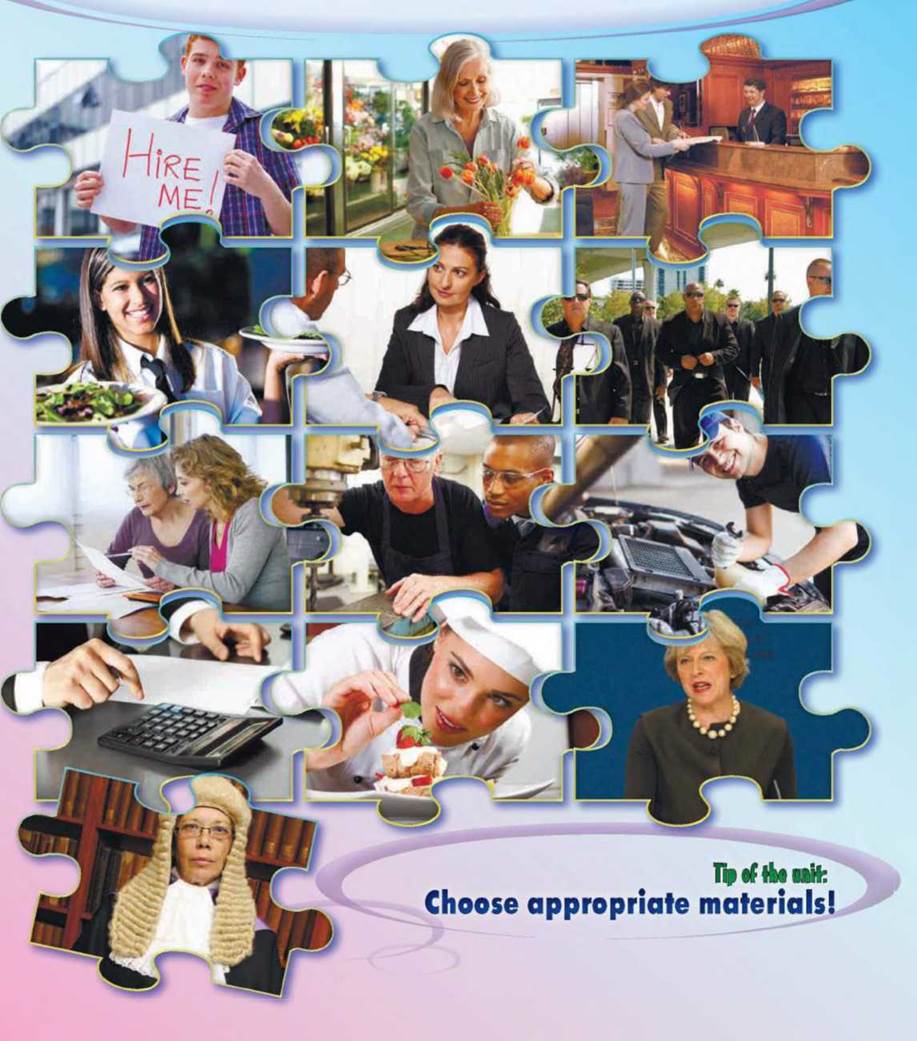
2. Look at the pictures on p. 50 and match them with the names of jobs below. Fill in the table with names of the jobs.
accountant, apprentice, chef, florist, judge, lawyer, mechanic, politician, receptionist, security guard, social worker, waitress
manual |
intellectual |
creative |
open-air |
inside |
requires qualification |
good for teens |
|
Share your results in class. Are there any differences? What are they? Why so?
3. In pairs, choose any job from p. 50 and make up a brief description of what people may do at these jobs. In turns, present your descriptions to the class without giving out the name of the job for other pairs to guess by asking a «Yes / No» question.
Use the verbs from ex. 1. Start like this: If you have / get / apply for, etc. this job…
4. Which of the jobs above do you find:
-prestigious?
-attractive?
-useful?
- absolutely necessary?
-under threat of disappearing?
Exchange your ideas with other students and give your reasons. Do your ideas differ greatly?
Did you know?
In the decade following the Second World War, more than 70 per cent of British workers were in manual labour.
5. What can you say about the young man with a «Hire me!» sign on page 50? Note down the reasons of what has happened to him to be ready to present in class.
Перша публікація: 01/01/2017
Останнє оновлення: 31/12/2023
Редакційна та навчальна адаптація: Даний матеріал зведено на основі першоджерела/оригінального тексту. Команда проєкту здійснила редакційне оглядове опрацювання, виправлення технічних неточностей, структурування розділів та адаптацію змісту до навчального формату.
Що було опрацьовано:
- усунення форматних дефектів (OCR-помилки, розриви структури, дефектні символи);
- редакційне упорядкування змісту;
- уніфікація термінів відповідно до академічних джерел;
- перевірка відповідності фактичних тверджень тексту першоджерела.
Усі згадки про автора, рік видання та походження первинного тексту збережено відповідно до джерела.