Підручник Англійська мова 8 клас - Калініна Л.В. - Генеза 2016 рік
Unit 2: Live and Learn
In this unit you will learn how:
• to talk about schooling;
• to compare school life in different countries;
• to speak about school routine;
• to discuss your extra-curricular activities;
• to check your knowledge and skills on the topic getting ready for your independent testing.
2.1. Similar or Different?
Word Bank |
Phrase Bank |
Communication Box |
• compulsory • first former • unfair • craft • scholarship • available • bewildered • top job • curriculum • single-sex school • deskmate • prestigious |
• to pay fees • to get used to sth • to attend school • to aim for • to have equal opportunities at the start • from inside • to see everything with one’s own eyes • to come as a surprise • to take exams • to upgrade one’s know ledge • to provide somebody with |
• It’s time to decide • I approve of prestigious • no more than |
I. Now for it!
In groups, think and decide what associations you have with the word ’school’. Fill in the word rose for it.
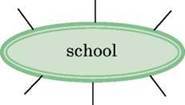
Example: I personally associate school with learning something new and becoming something new.
II. Reading
Oksana Petrenko has recently spent a year studying in English school. On coming back, she wrote a big article to the newspaper «English» about her impressions of schooling in Britain. Read the article and answer her questions.
Similar or Different?
It will be interesting for you to know that children in Britain do not have to go to school until they are 5. Those who are aged from 5 to 7 go to infant school and those from 8 to 11 - to junior school. So at the age of 11 their primary education is over and compulsory secondary education begins. I've learned that traditionally, secondary schools in Britain are divided into five years called forms. Unlike Ukrainian children, English pupils go to the first form only when they are 11/12 years old. It was odd to hear grown-ups saying they were second or the third formers and it took me time to get used to it.
My tutor Miss Joy told me that many years ago all children in Britain had to take the exam called ’eleven-plus'. Those who got the best results in the exam were chosen to go to the best state school called «grammar school». Most British towns used to have at least one «grammar school» at which more academic subjects were studied. It was prestigious to study at such schools because pupils got sufficient academic education that gave them an opportunity to go to university. Those who failed the ’eleven-plus' went to secondary modern schools, which gave secondary education only in name and didn't prepare children for universities, but for practical jobs. Many people thought that this system was unfair, and as a result, ’comprehensive schools' were introduced. Miss Joy said that it was the right thing to do because nowadays pupils have the equal opportunities. I guess Miss Joy is right saying this as she has been working at school for more than 30 years.
I was studying at a comprehensive school and could see everything with my own eyes from the inside. Pupils are offered a wide choice of subjects there: from art and craft to science and computers. Besides, pupils are often put into «sets» for such subjects as Maths or languages. I was in the English language set with other pupils who were interested in this subject. Can you imagine that one pupil may be in the highest set for Maths and the lowest set for English? It came as a surprise to me.
At the end of the fifth form (at the age of 16) pupils take their first public exam for the General Certificate of Secondary Education (GCSE). It's time to decide: to leave school and to get professional training at further education college or to stay on into the sixth form for another 2 years and prepare for the «A» Level exams. Some of my friends study there as they want to get «A» Level results at least in two or three subjects to get a place at one of British universities. I approve of them and think it's good to have the sixth form for upgrading your knowledge and making a final decision. I told my host mum Mrs Collins about it and she said that not all schools in Britain are available to all children. Seeing my bewildered face, she explained that there are private or independent, so called public schools, which are attended by no more than 10 per cent of schoolchildren. These schools are costly (from £6,000 - 9,000 a year and parents have to pay fees). Nevertheless some parents choose them because they aim for high academic standards and provide pupils with the right social background for top jobs. Mrs Collins added that public schools like Harrow, Winchester and Eton are very ancient and have a high reputation for academic achievement. I asked myself: Are pupils similar or different? Shouldn’t they be given equal opportunities at the start? What do you think?

Across Cultures: Great Britain
tutor - a teacher who directs the studies of a number of subjects and is responsible to give them advice on personal matters.
host mum - a person who receives oversea students and provides food, drink and amusement for them.
«A» Level - an examination in a particular subject which students in England take at the age of 18. Students usually need to pass at least three «A» Levels in order to go to university.
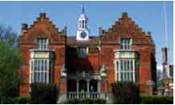
Harrow - a well-known British public school for boys, established in 1572.

Eton - a public school for boys started in 1440 by King Henry VI.
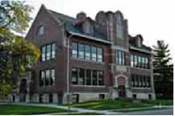
Winchester - the first public school established in 1382.
III. Language Track

1. In the text, find at least 5 words with the sound /ʤ/. Reproduce them in context. Practise saying some of them in your own sentences.
Example: /ʤ/ - aged
Those children who are aged from 5 to 7 go to infant school.
Words and Phrases in Context
1. Study the difference in meaning. In the text «Similar or Different?» find the sentences with ’to be/get used to doing’ and ’used to do’, ’to learn’ and ’to study’ and interpret their meanings in contexts. Make up your sentences by analogy.
to learn - to gain knowledge of a subject or practical skill by experience or studying it. Example: Little John has learned the poem. |
to study - to get the theory of the subject by reading about it and attending classes at school or college. Example: I moved to London to study English. |
2. From the text, reproduce the following words in context and comment on their meaning. Use them to describe schooling.
Example: primary.
At the age of 11 their primary education is over. I think, in this context ’primary’ means elementary.
Ukrainian children spend four years in primary school.
• primary
• infant
• junior
• secondary
• academic
• comprehensive
• equal
• public
• private
• independent
Br E - primary school
Am E - elementary school
3. In the text, find the answers to the following questions and add 1 or 2 logically connected sentences to them.
Example: When do British children begin to go to school?
- Children in Britain do not have to go to school until they are 5. Those who are aged from 5 to 7 go to infant school and those from 8 to 11 - to junior school.
1. When do British children begin to go to school?
2. What types of school does primary education in Britain consist of?
3. What have you learned about the ’eleven-plus exam’?
4. When do British children go to the first form?
5. Why are grammar schools prestigious?
6. What do secondary modern schools aim for?
7. Why were comprehensive schools introduced in Britain?
8. What are the advantages of comprehensive schools?
9. What kind of school is not available to all children in Britain and why?

1. In the text, find 5-7 facts about British schooling and complete the sentences with them.
• Oksana had to get used to____________________
• British children used to_______________________
Examples: Oksana had to get used to studying at a comprehensive school. All children in Britain used to take the exam called «eleven- plus».
2. From the text, reproduce these word-combinations in context and complete the instructions:
• If you have experienced something so that it no longer seems surprising, strange, or difficult, use______.
• If you did something regularly or for a period of time in the past, use ______________________ .

3. Match the types of school to their definitions. Speak about types of school in Britain and Ukraine.


IV. Communication Track
1. Speaking
a) Read the information about public schools in Great Britain and the USA and find differences and similarities. Fill in the Venn Diagram.

Public schooling in Britain
Public schools are, in most of Britain, independent schools and, despite their names, are not part of the State education system. Many of Britain’s 200 public schools are very old. At first there were single-sex schools only for boys (Eton, Harrow, Winchester) or for girls (Cheltenham Ladies’ College) and Roedeam. But nowadays many of them teach boys and girls together.
Most pupils go to public schools at the age of 13 after attending a private preparatory school. Many of these schools are boarding schools where students live during their term time.
Older pupils are chosen as prefects (pupils who have authority over younger pupils) and in a few schools younger pupils have to do small jobs for the senior pupils. This is sometimes called fagging and was usual in most schools in the past.
Sport is an important part of the curriculum and schools compete against each other in football, cricket, rugby, hockey and rowing.
As these schools provide high academic standards, a much higher proportion of students from public schools win University places especially to Oxford or Cambridge Universities. Former public school students may have an advantage when applying for jobs because of the «Old school tie» or the «Old boy network» - that is their friendly attitude to each other, the symbol of the time when they studied together.

Public schooling in the USA
In the US a public school is a school run by the government. Schools that students have to pay to attend are called private schools. Some private schools in the USA are also boarding schools (like Phillips Exeter Academy) and very similar to Britain’s public schools.
They are very expensive, have a high reputation for academic achievement and many of their students come from rich and well- known families. Children often go to the same schools as their parents.
Some US private schools give special attention to a particular area of study. There are, for example, schools for people who are good at music or art. Military schools are often chosen by parents who think their children need a lot of discipline.
Private schools in the US are often single-sex and their students usually wear a uniform. This is unusual in American public schools. American parents choose a private school for a number of reasons, but in general they believe that the quality of education is higher in private schools. Most private schools offer scholarships to students from poorer families, and in some parts of the US the government may under certain circumstances pay for children to attend a private school.
Venn Diagram

Say if there are schools of such kind in Ukraine.
b) Suppose you had a chance to talk with one of the pupils from Britain. Discuss schooling in your countries using the pattern below.
Pattern:
- I say, … when do children begin to go to school in Britain?
- In my country … . Is it the same in yours?
- No, in Ukraine children aged … . I have read that there are different types of school in Britain. Which of them do … ?
- You are right. In Britain … I personally go … senior pupils of my school can… . Is it similar with you?
- Sure. We can choose … , but it isn’t called a «set». We also have a very broad … at our secondary schools.
- We have the sixth form which … and we need at least 3 «A» Levels … . And what … in Ukraine?
- We differ. All secondary schools … .
- Are public schools typical in your country?
- No, we don’t have them. There are … but they are not well spread. Our schools are so … .
- May I … with my own eyes?
- No problem. You are welcome … .
- Thank you.
c) In the whole class, discuss the following statement:
«School should give learners equal opportunities at the start».
2. Listening
a) Before you listen
You are going to listen to the story «Treacle Tart». Make up a list of 3-5 ideas about what can cause a school conflict.
b) While you listen
Listen to the story «Treacle Tart» and say what the school conflict was about.
c) After you listen
Say what advice you would give to the new pupil to avoid school conflicts if you were one of his classmates.
3. Writing
a) Before you write
• Brainstorm with your friends what answers to Oksana’s questions about schooling in your country should be included into your letter to the editor of the newspaper «English» that published her article.
• Make a list of words/phrases you’ll use to formulate them.
b) While you write
• If you want to respond to an article appearing in the publication, write a letter to the editor. Follow the format of the letter below.
How to write a letter to the editor
Content Tips |
Language Tips |
• Address the editor • State the reasons for writing in the first paragraph • In the following paragraphs, describe the issue you are writing about • Illustrate your ideas with examples if necessary • End with a concluding paragraph • Give the closing remark |
• Dear Editor, or Dear Sir / Madam, • I would like to compliment … on … . • There are a couple of points that … . • One is that … . • The second point is tied to the first. • In closing I want to thank you for … . • It is hoped that readers will decide … • Yours sincerely / Sincerely yours / Yours faithfully |

At Home: In your WB, write a letter to the editor about schooling in Ukraine.
Перша публікація: 01/01/2016
Останнє оновлення: 31/12/2023
Редакційна та навчальна адаптація: Даний матеріал зведено на основі першоджерела/оригінального тексту. Команда проєкту здійснила редакційне оглядове опрацювання, виправлення технічних неточностей, структурування розділів та адаптацію змісту до навчального формату.
Що було опрацьовано:
- усунення форматних дефектів (OCR-помилки, розриви структури, дефектні символи);
- редакційне упорядкування змісту;
- уніфікація термінів відповідно до академічних джерел;
- перевірка відповідності фактичних тверджень тексту першоджерела.
Усі згадки про автора, рік видання та походження первинного тексту збережено відповідно до джерела.