Підручник Англійська мова 8 клас - Калініна Л.В. - Генеза 2016 рік
Unit 6 Britain is Great
In this unit you will learn how:
• to talk about the geographical features of Great Britain;
• to give facts about the four lands of the UK;
• to talk about people in Britain;
• to plan your visit to Britain;
• to express respect for British traditions;
• to check your knowledge and skills on the topic getting ready for independent testing.
6.1. Where?
Word Bank |
Phrase Bank |
Communication Box |
• tunnel • landscape • destination • populous • leek • daffodil • dragon • thistle • heather |
• to be separated from…by… • to go down like a backbone • to be home of something • to look forward to something • to have a border with something • chalk cliffs |
• … for short. • … , I must admit |
I. Now for it!
Look at the map of the British Isles and label its parts with the words from the box. Say what geographical features it shows.

Example: If you look at the map, you can see two big islands - Great Britain and Ireland. The North Sea is to the east of Great Britain…
II. Reading
Read the entry from Paul’s travel diary and say what natural attractions he hasn’t seen in Britain yet.
Paul’s Travel Diary
Look at the map of the British Isles. You can see them to the north-west of the mainland of Europe. Do you know what the two largest islands are called? Those are Great Britain and Ireland. Besides, there are over five hundred small islands. Altogether they make the United Kingdom of Great Britain and Northern Ireland, Britain, for short. That’s where I have arrived recently.
As Britain is separated from the continent by the English Channel, I had three options - to take a plane or cross it by ferry or by train through the channel tunnel. I chose the quickest and the most popular way of travelling and there I was - landing at Gatwick Airport, 43 kilometres south of London (as said in the leaflet I picked at the Information desk.)
I could hardly believe my eyes: quite beautiful landscapes and 2,000 years of history were waiting for me to explore. I must admit that it is easier said than done as this island state is made up of four lands: England, Wales, Scotland, and Northern Ireland. My first destination was England as it is the largest and most populous of the four. I have already bought the postcards of rather famous natural attractions such as the rivers Thames and Mersey, the south-eastern coast, sandy or muddy, with occasional chalk cliffs, the Pennines going down England almost like a backbone, and the Lake District, of course.
West of England is Wales. With a charm of its own, it is home of Mount Snowdon, over 1,000m high, capital Cardiff, the leek, the daffodil, and the red dragon as the national symbol of the Welsh country. I’m so looking forward to visiting Wales!
If I have a chance to go to the North of England, I’ll find myself in Scotland some day and enjoy the Highlands and the Lowlands, many beautiful rivers and lakes (called lochs), the legendary thistle and heather covering the mountainsides. Maybe, I will even be the one to discover the mystery of the Loch Ness Monster at last! Hooray!
Last, but not least Northern Ireland. It is at its nearest point only 21 km from Scotland. It is separated from Great Britain by the Irish Sea. It has a border in the south and west with the Irish Republic. At its centre lies Lough Neagh, Britain’s largest freshwater lake. The whole island is known for its beautiful, green countryside, that is why it is sometimes called the Emerald Isle.
I can’t wait to see it all!
Across Cultures: Great Britain

Gatwick Airport - one of the airports serving London, which is used for international flights.

The Thames - the main river flowing through London, and England’s most important river, which flows into the North Sea.

The Mersey - an important river in the northwest of England which flows into the Irish Sea.

The English Channel - the piece of water between France and England.

The Pennines - a mountain range running down the centre from the north to central England.

The Highlands - mountainous area in the North of Scotland.
The Lowlands - the central and eastern low- lying part of Scotland.
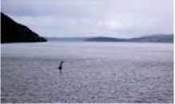
The Loch Ness Monster, also Nessie - the name given to a very large animal, supposed to live in Loch Ness in North Scotland
III. Language Track

1. In the text above, find and read out the geographical names with correct stress. Practise saying the sentences with them to your friend.
Example: the British Isles, the United Kingdom, the English Channel.

1. Study the difference in meaning. In the text ’Paul’s Travel Diary», find the sentences with these words and interpret their meanings. Make up your own sentences with them.
popular (adj.) — liked by a lot of people. Example: Brighton is a popular holiday resort. |
populous (adj.) — with a large population in relation to the size of an area. Example: England is the most populous land in Britain. |
2. Look at the photos in the box «Across Cultures» and describe Paul’s travel experience.
3. Imagine you’ve met Paul. Ask him questions about Britain’s geographical features. Role-play the dialogue following the pattern below.
Pattern:
You: Hello, … recently, haven’t you?
Paul: Yes, I took … and … .
You: What have … yet?
Paul: My first destination was … . Besides, I have already … .
You: What about … ?
Paul: … has a charm of its own. It is … .
You: How about … ?
Paul: If I have a chance, I’ll find myself … and … . Maybe, I will even … . You: What are you planning … , to finish with?
Paul: … , of course. It is only … . I can’t wait to see … .
You: Have a … trip!
Paul: Don’t worry, I will.

1. From the text «Paul’s Travel Diary», read out the sentences with the adverbs of degree rather, quite, almost and interpret their meaning in context. Complete the instructions:
• If you want to make adjectives stronger, use…
• If you want to make adjectives weaker, use…

2. Make the meaning of the sentences stronger or weaker.
Example: The Thames is a beautiful river. - The Thames is a really beautiful river.
1. Great Britain is a big island.
2. Ireland is a smaller island than Great Britain.
3. There are a lot of beautiful landscapes in Britain.
4. The English Channel is not deep.
5. England is a populous land.
6. Mount Snowdon is not high.
3. Read about Paul’s visit to England and fill in adverbs of degree.
Paul has arrived in London ___ recently. Yesterday he saw many places of interest: the British Museum, the Houses of Parliament, the National Gallery, the Zoological Gardens and others. Of course, he hasn’t been outside London yet - he was _____busy. He is planning to go to Cambridge on a weekend trip as it is a ____ popular tourist destination.

IV. Communication Track
1. Speaking
a) Read the questions of «United Kingdom Quiz» and try to answer them. To compare your answers with the right ones, you can use this link:
http://resources.woodlands-junior.kent.sch.uk/geography/britain.htmi
Take our United Kingdom Quiz.
Questions about England
Why does England dominate the UK? 
Questions about Great Britain What is Great Britain?
Is Britain the same as Great Britain?
Which countries are in Great Britain? Find out about Great Britain
Questions about the United Kingdom Where is the UK?
What countries make up the UK?
What is the official title (name) of the UK?
Why is the whole of Ireland not part of the UK?
How and why was the UK formed?
Find out about the UK
Questions about the British Isles
What are the British Isles?
Find out about the British Isles
b) In pairs, make up a dialogue discussing what questions about the geography of Great Britain you’ll ask your British e-pals round the beginning given.
- Do you know what … ? Our British e-pals Gerry and Suzie have taken part in the «United Kingdom Quiz» and won!
- Great! Now we can ask them any questions about the geography of Great Britain.
- I think we should start with some particulars.
- …?
c) In the whole class, draw a parallel between Great Britain and Ukraine in some general facts basing on what you have read and learned.
Comparison Items |
Great Britain |
Ukraine |
1. Population |
||
2. Area |
||
3. Parts |
||
4. Borders |
||
5. Highest mountains |
||
6. Longest rivers |
||
7. Largest lakes |
||
8. Climate |
2. Listening
a) Before you listen
You are going to listen to the story «The Scottish Thistle». Write three questions you want to get answers to from the story.
b) While you listen
Listen to the story «The Scottish Thistle» and say why the Scots took the thistle as their national emblem. Correct the errors.
1. In old times the Norsemen landed on the west coast of Scotland.
2. They wanted to make friends with the Scots.
3. The Scots moved to the River Clyde.
4. They put up their camp in the morning.
5. The Norsemen made a lot of noise on their way.
6. They took the Scots by surprise.
c) After you listen
Say if you find the legend curious. Give your ideas on the geographical position of Scotland.
3. Writing
a) Before you write
If you want to advertise area attractions or special events to the public, write a flyer.
• Brainstorm with your friends and say what you’ll draw your readers’ attention to while advertising a place in Great Britain.
• Make a list of words and phrases you’ll use writing a flyer.
b) While you write
Follow the format of writing a flyer.
How to write a flyer
Content Tips |
Language Tips |
• Introduce a place or an event and specify its importance to the visitors. • Describe its major attractions • Encourage the reader to visit the place or to participate in the event. |
• … is a large area of breathtaking natural beauty. • It contains … . • It is associated with… . • It attracts … spectators. • Don’t miss your chance to… |

At Home: In your WB, write a flyer about your favourite area attractions in Great Britain.
Перша публікація: 01/01/2016
Останнє оновлення: 31/12/2023
Редакційна та навчальна адаптація: Даний матеріал зведено на основі першоджерела/оригінального тексту. Команда проєкту здійснила редакційне оглядове опрацювання, виправлення технічних неточностей, структурування розділів та адаптацію змісту до навчального формату.
Що було опрацьовано:
- усунення форматних дефектів (OCR-помилки, розриви структури, дефектні символи);
- редакційне упорядкування змісту;
- уніфікація термінів відповідно до академічних джерел;
- перевірка відповідності фактичних тверджень тексту першоджерела.
Усі згадки про автора, рік видання та походження первинного тексту збережено відповідно до джерела.