Підручник Англійська мова 8 клас - Калініна Л.В. - Генеза 2016 рік
Unit 5 The More You Read …
In this unit you will learn how:
✵ to discuss your reading choices;
✵ share your impressions of your favourite books and literary characters;
✵ talk about the writer/poet you like best;
✵ speak about your visit to the library;
✵ to check your knowledge and skills on the topic, getting ready for independent testing.
5.1. Reading Choices
Word Bank |
Phrase Bank |
Communication Box |
✵ crucial ✵ particularly ✵ fiction ✵ solution ✵ plain ✵ well-read ✵ fable ✵ genre ✵ book worm |
✵ to swallow a book ✵ to care for something ✵ (not) to mind doing something ✵ to keep sb in the know ✵ to squander one’s time ✵ to familiarise oneself with something/somebody ✵ to turn to something ✵ to read page by page ✵ to meet the needs of the day |
✵ … is something I can’t do without. ✵ Actually, … ✵ I can’t afford to … . ✵ With me, it’s just the other way round. ✵ Once in a while. ✵ There is nothing like … . ✵ Oh no, that’s not my idea of heaven. |
I. Now for it!
Read the quotations about reading and illustrate them with your reading experience.

Reading makes a full man.
Francis Bacon

Books help us understand who we are and how we are to behave.
Anne Lamott, American novelist
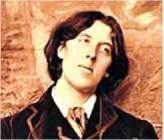
If one cannot enjoy reading a book over and over again, there is no use reading it at all.
Oscar Wilde
Example: I agree with Francis Bacon. When I read much, I know much and can discuss my favourite books, writers, literary characters with friends. I can also express my opinion on the books I’ve read. Reading makes a person educated and well-read.
II. Reading
Two friends are talking about books. Read the dialogue and say whose side you would take. Why?
Talking about Books Part One
Steve: Are you ready for the break, Ann?
Ann: Actually, I can’t wait to find out what is going to happen in my book. I had to stop reading at an absolutely crucial moment!
Steve: What? Swallowing another novel? Reading these books of crime and unhappiness? I can’t afford to read fiction: I’m much too busy. Besides, I don’t particularly care for it.
Ann: With me, it’s just the other way round. I’m fond of fables and legends, poetry and science fiction. I even don’t mind reading a detective novel once in a while just for relaxation.
Steve: I differ. I don’t have my favourite literary genre, I prefer reading newspapers and magazines. They keep me in the know, see? Why squander your precious time on reading books? You ought to give yourself more time for sleeping, eating, socialising and watching TV.
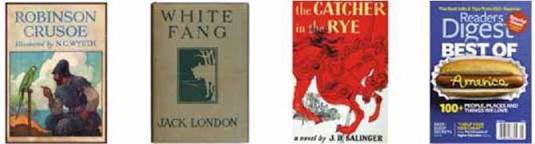
Ann: You may think so, but there is nothing like a good book to me, such as: Daniel Defoe’s Robinson Crusoe, Jack London’s White Fang or J. Salinger’s The Catcher in the Rye. Reading makes a full man, you know. But I agree - it does take time.
Br E - familiari se
Am E - familiari ze
Part Two
Steve: Here is the solution: read the Reader’s Digest. It is designed to meet the needs of the day. Life is fast. And time is money. So every month when you receive a magazine from your Book of the Month Club, you may familiarise yourself with the title and the table of contents.
Ann: But what about the story itself? How do you know its content?
Steve: You ought to turn to the inside and read the summary of the book … It’s just about two hundred words! You get plain action, a brief account of characters and all that goes into the making of a work of good literature.
Ann: Oh no, that’s not my idea of heaven. I would rather read a whole book page by page, and fill in my reading log in which I record the key events that impressed or puzzled me, put questions to the characters and write my own associations with something exciting I have read.
Steve: Wow, you are a true book-worm!
Ann: Exactly. Reading is definitely something I can’t do without!
Steve: Tastes differ.
Across cultures: the UK and the USA
Reader’s Digest is a monthly family magazine popular in more than 70 countries, with 50 editions in 21 languages. It covers a variety of topics from pop culture to business, and it also publishes a regular book excerpt.
The Book of the Month Club is a business in the United States where you order books by mail. Members are offered a new book each month.
III. Language Track

1. From the text, find out 8 words in which -ng is read as /η/. Reproduce them in context. Practise saying them in your own sentences.
/η/ going, reading.
Example: I had to stop reading at an absolutely crucial moment. I’m fond of reading novels.

1. Study the difference in meaning. Reproduce the sentences with them from the text and interpret their meaning in contexts. Make up your own sentences by analogy.
content (η) a subject that a book deals with or the story that it tells. Example: I like the content of the book but not the author’s style. |
contents (n) the list of different chapters of a book. Example: Every book has a table of contents. |
2. From the text, reproduce the sentences which have the same meaning as the given ones.
Example: Why waste your time on reading?

Why squander your precious time on reading books?
✵ I like to read books more than anything else in the world.
✵ If you read more, you know more.
✵ Read the short content of the book.
✵ I’d rather read all pages of the book.
✵ I personally can’t live without books.
✵ You read one book after another.
Say which of the phrases characterize your reading choices.
3. Match the words and phrases from the text to their explanations. Make up your sentences.

1. From the text, read out the sentences with elicited modal verbs and interpret their meaning in context. Complete the instructions:
✵ If you want to express future possibility, use …
✵ If you want to give a mild suggestion, advice or opinion, use …

2. Say what books your classmates ought to read at school and what books they may read in their free time.
Example: I ought to read text-books on different subjects at school. In my free time, I prefer to read my favourite adventure books.
3. Say what the following people may or ought to do.
Example: A boy doesn’t like reading.
You ought to read, because reading makes a full man.
✵ your friend complains that he has no time for reading
✵ your classmate doesn’t know what books to read
✵ you younger sister/brother reads only fairy tales
✵ your friend swallows the books and has no time for other activities
✵ your cousin prefers watching TV to reading.

IV. Communication Track
1. Speaking
a) Speak about your reading choices. Use a completion map.

Example: I personally adore reading.
✵ My reading choices depend on…
✵ Sometimes I turn to…
✵ But more often I…
✵ If the book is particularly interesting, I…
✵ I squander my time on reading…
✵ There is nothing like…
✵ I prefer to read…and…
✵ For me, reading is something …
b) Pair up with your friend and strike a conversation round the beginning given.
- Swallowing another book? What is it about this time?
- As I’m a great admirer of detective stories, it’s Agatha Christie’s «The Mouse Trap». Have you read it?

Ann
There is nothing like a good book to me.

Bob
Reading is something I can’t do without.

Helen
I don’t care for reading. It takes so much time.

Mike
I don’t squander my time on reading. I watch TV to keep me in the know.

Oksana
I share the truth of the old proverb «The more you read, the more you know». That’s why I read a lot.
с) In the whole class, discuss children’s ideas about reading.
2. Listening a) Before you listen
Read these words and phrases and predict what the story may be about.
history |
the South |
slavery |
courageous |
to express the opinion |
to escape |
to influence somebody |
evil |
black people |
freedom |
b) While you listen
Listen to Paul’s story and mark True/False statements.
1. Paul is fond of reading books about the war.
2. Paul’s favourite literary genre is science fiction.
3. Paul is interested in literary characters’ feelings.
4. Paul believes that a book can help to change history.
5. «Uncle Tom’s Cabin» describes the hard life of black people in the North of the USA.
6. Paul admired a brave young woman Eliza.
7. He also approves of old slave Tom’s doings.
8. The author of the book started a big war against slavery.
c) After you listen
Say what books may influence you and why.
3. Writing
a) Before you write
If you want to give a brief restatement of the main points of a book without giving details, write a summary.
✵ Brainstorm with your friends what makes your favourite books memorable.
✵ Make a list of words and phrases you can use to describe your favourite book.
b) While you write
Follow the summary of a book.
How to Write a Summary of a Book
Content Tips |
Language Tips |
✵ Briefly tell what the book is about ✵ Keep your description short ✵ Finish with a concluding thought of the book as a whole. |
✵ The major topic is… ✵ The events that moved the story forward include… ✵ The unique thing about…seems to be… ✵ The book depicts… ✵ The central figure (idea) is… ✵ Throughout most of the book… ✵ In the final chapter… ✵ I would recommend it to others because… ✵ There is no question that… |

At Home: In your WB, write a summary of the book you’ve recently read.
Перша публікація: 01/01/2016
Останнє оновлення: 31/12/2023
Редакційна та навчальна адаптація: Даний матеріал зведено на основі першоджерела/оригінального тексту. Команда проєкту здійснила редакційне оглядове опрацювання, виправлення технічних неточностей, структурування розділів та адаптацію змісту до навчального формату.
Що було опрацьовано:
- усунення форматних дефектів (OCR-помилки, розриви структури, дефектні символи);
- редакційне упорядкування змісту;
- уніфікація термінів відповідно до академічних джерел;
- перевірка відповідності фактичних тверджень тексту першоджерела.
Усі згадки про автора, рік видання та походження первинного тексту збережено відповідно до джерела.