Підручник Англійська мова 8 клас - Калініна Л.В. - Генеза 2016 рік
Unit 4 In the World of Mass Media
In this unit you will learn how:
• to share your preferences in reading the press;
• to talk about your favourite TV programmes;
• to describe Internet innovations;
• to discuss radio news;
• to check your knowledge and skills on the topic getting ready for independent testing.
4.1. Are You a Newspaper or Magazine Reader?
Word Bank |
Phrase Bank |
Communication Box |
• issue • to comprehend • interpretation • to subscribe • well-illustrated • strip cartoons • domestic/foreign news |
•to provide somebody with something •up-to-date information •to specialize in something •to give a wide coverage of something •to see for oneself •to be in the know of some thing •quality paper |
• By all means. • Take it for granted • Here it is. • I can hardly do without it. |
I. Now for it!
In groups, look at the pictures and say what these people are reading in different places. How much true is it about you?

Example: Some of these people are reading newspapers, others are reading books or magazines. I prefer to read about the news on the Internet.
II. Reading
Read the dialogue «Magazines or Newspapers?» in which the teenagers are discussing their preferences in the press and speak about their tastes.
Magazines or Newspapers?
Part One
John: I say, Paul, do you like to read magazines?
Paul: Sure. They provide me with lots of in teresting and up-to-date information. I can hardly do without them.
John: And what are your favourite magazines, I wonder?
Paul: As I’m interested in politics, I prefer to read the «Current».
John: The «Current»? What information does it publish? I’ve never seen it.
Paul: That’s a pity. This is a magazine for young grown-ups that special ises in writing about world news, politics and social life in different countries. Its correspondents describe world news and other events in the language, which any teenager can comprehend. If you read it, you’ll see for yourself.
John: Don’t be ridiculous! If I were you, I would rather turn to newspapers than to youth magazines. Newspapers always give a wide coverage of events.
Paul: And you? Are you much of a newspaper reader?
John: Not really, though I like to read Sunday newspapers, especially comic strips because they are funny, look at the numerous drawings and do the puzzles. But my elder brother always buys the evening papers like the Evening News which pays special attention to sport news.
Paul: My parents want to know about domestic and foreign news so they read «The Guardian». As you see - to each his own.
John: British quality papers are so thick with lots of information in politics, finance, and business.
Paul: True, true. A man with «The Times» has become a symbol of a typical British person.

Part Two
Martha: Hey, Bob, what are you reading now?
You seem to be surrounded by information from the time you wake up in the morning until the time you sleep at night. You are a typical American.
Bob: Take it for granted, I can hardly imagine my life without the press.

It’s crucial for me to stay current with the news. And this is the latest issue of the Saturday Evening Post, if you like.
Martha: No, but I like being in the know, for instance, comparing prices or reading funny comics about some of them.
Bob: I also like reading supermarket tabloids. They look like newspapers but pay much attention to celebrities’ lives, children, pets, diet and health tips!
Martha: What’s your favourite?
Bob: It’s the National Enquirer.
Martha: My dad says this tabloid has the biggest circulation.
Bob: That’s right, about more than 4 million copies.
Martha: That means we are not the only readers of that stuff.
Bob: I thought you were reading the New York Times. Is there anything worth reading?
Martha: As a rule, they publish interesting information for leisure reading and, besides, there are quite a lot of adverts.
Bob: Is there anything you want to buy?..
Part Three
Lesya: Hey, Oksana, have you bought today’s issue of your favourite magazine?
Oksana: You mean «Round the World»?
Here it is. There is a continuation of the story about Australian fauna. If you were interested in wild life, you would like it. If I’m not mistaken, you have green fingers. So, why don’t you read it? I also like reading about interesting discoveries or historical findings.
Lesya: You are lucky. There are a few magazines for teenagers in Ukraine, like «Discoveries and Hypotheses». They are extremely popular, especially with boys. My brother reads it on a regular basis. He has even subscribed to it for another year. He is keen on modelling ships and the magazine publishes material about different ancient and modern ships and gives instructions how to make their models. Taras has already made 10 model ships.
Oksana: Quite a big collection, I should say. Can I borrow some magazines to look through?

Across Cultures: Great Britain/the USA
Melody Maker — a British weekly magazine about rock and pop music.

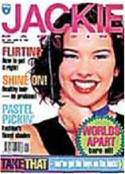
Jackie Jackie — a British weekly magazines for teenage girls.
Hello — a popular magazine published each week in Britain, which contains photographs of and articles about famous people.

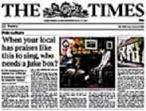
The Times, The Guardian — British national newspapers.

The Saturday Evening Post — a popular US family magazine which contains news, short stories, humorous cartoons and reviews.

tabloid - a newspaper which contains many pictures and short accounts of the main points of the news.

The National Enquirer — a US weekly tabloid newspaper known for its strange unbelievable articles about supernatural events and famous people.

III. Language Track

1. In the text «Magazines or Newspapers?», find at least 6 words with -or which conveys the sounds /ɒ/, /ɔ:/ and /ə:/. Reproduce them in context. Practise saying some of them in your own sentences.
Example: /Ɒ/ - borrow
Can I borrow some magazines to look through?
1. Study the difference in meaning. In the text ’Magazines or Newspapers?» find the sentences with ’funny and ’ridiculous’, ’hard’ and ’hardly’ and interpret their meanings in contexts. Make up your sentences by analogy.
funny — causing laughter. Example: The paper has all sorts of funny ideas. hard — using a lot of energy or effort. Example: She has worked hard all her life |
ridiculous — very silly or unreasonable Example: You can read about ridiculous things there. hardly - almost not. Example: I could hardly speak. |
2. Choose the right words and complete the sentences.
1. It was a funny/ridiculous story and we couldn’t but laugh.
2. Look! It’s raining hard/hardly.
3. Sorry, but I can hard/hardly believe your words.
4. You look funny/ridiculous in this yellow hat.
5. If you see this programme, you will like it, because it is so funny/ridiculous.
6. The pain was so sharp that I could hard/hardly move.
7. I can hard/hardly breathe in this stuffy room.
8. Don’t be funny/ridiculous, nobody will believe you.
3. Look at the most popular American, British and Ukrainian newspapers and magazines and match them to the sayings about them. Say which of them you’ve seen or read.


1. From the text above, read out sentences with an unreal condition and interpret their meaning in context.
2. Read the following examples of 2nd Conditional, make a table of changes and comment on them.
Example: If I have free time, I will read this magazine from cover to cover. 
If I had free time, I would read this magazine from cover to cover.
have had
will read would read
• If all goes well, Ann will go to study abroad.
If all went well, Ann would go to study abroad.
• If Peter becomes a good journalist, he will work for the Times.
If Peter became a good journalist, he would work for the Times.
Complete the instruction
• To talk about an unreal situation, use…
Example: If I were a regular reader of this magazine, I would subscribe to it.
• To give advice, use.
Example: If I were you, I would subscribe to this newspaper.

3. Say what newspapers or magazines you would read if:
• you had more free time;
• you were interested in international affairs;
• you wanted to know more about Ukrainian society;
• if you wanted to stay current with the news.
Example: If I had much free time, I would read my favourite magazine «Animals Around Us». I have some pets at home, I want to know more about them.

IV. Communication Track
1. Speaking
a) Read the information about the press in Britain and America and find similarities
and differences. Fill in Venn diagram and comment on your findings.
The Press in Britain…
It’s common knowledge that newspapers report the news. Published on a regular basis, usually daily or weekly, they also interpret events behind the news. In addition, newspapers give useful information, such as stock market prices, weather reports and television programmes.
They are also a popular source of reading for entertainment. People often buy newspapers for their feature articles on subjects of wide interest, such as travel and fashion, for their comics and crosswords, and for their regular columns on topics, such as gardening, eating out, show business and astrology.
The British are believed to be the greatest newspaper readers in the world. They read newspapers at breakfast, on the bus or on the train when they go to work and on the way back home.
British daily papers are published from Monday to Saturday. The series of quality papers such as The Times, The Guardian, The Financial Times, The Independent and The Daily Telegraph are for those who want to know about important happenings everywhere, both domestic news and foreign news.
Compared with Ukrainian papers, British quality papers are very thick. They usually consist of separate sections such as Politics, Finances, Business, etc. It’s not uncommon for a newspaper reader to use only one or two sections and throw the others away.
Popular papers or tabloids, such as The Daily Mail, The Sun or The Daily Express make a much easier reading and have a more general readership.
Nearly all papers pay special attention to sports news. The evening papers, such as The Evening News are often bought because people want to know the winner of a race or the result of football pools.
The Sunday papers are not Sunday editions of the daily papers but separate weekly editions coming out on Sundays. In addition to the news, they usually provide interesting articles on arts, newly-published books, and gardening. Some of them, such as The Sunday Times have a very high reputation and the best critics and journalists write for them.

The Daily Telegraph

Daily Mail

The Sunday Times
… And Elsewhere
Americans can’t imagine their lives without press.
The New York Times is considered to be the nation’s most prestigious newspaper. It established itself a serious alternative to sensationalist journalism. The paper stressed coverage of important national and international events - a tradition which still continues. Today the Times is issued as a major reference tool by American libraries and is standard reading for diplomats, scholars and government officials.
Among the most prominent are the Washington Post, the Los Angeles Times, the Boston Globe, and the Christian Science Monitor. The Miami Herald, for instance, responded to the needs of its city’s influx of Spanish-speaking residents by presenting extensive coverage of Latin America and printing a separate Spanish edition.
But the largest readerships were won by magazines that catered for Americans’ increasing leisure time and appetite for consumer goods, such as Cosmopolitan, The Ladies Home Journal and The Saturday Evening Post. Publishers were no longer just selling reading material: they were selling readers to advertisers.
Another popular phenomenon is the appearance of supermarket tabloids, sold mainly at grocery stores.
Now the total number of daily newspapers in the USA is declining. There are several reasons for this. The movement of people from cities to suburbs led to growing popularity of local weekly newspapers. Working husbands and wives found they had less time to read. But the most important reason was probably the growing popularity of television including TV news like, for example, CNN, and also the internet.

The New York Times

The Miami Herald

The National Enquirer
Venn Diagram

b) Suppose you have a chance to talk with an English (American) teenager about the press in your countries. Discuss the newspapers and magazines popular with teenagers. Use the pattern.
Pattern:
- I say what newspapers and magazines are … in your country?
- It’s … and … . We can hardly imagine our life without it. Are Ukrainians … ?
- Exactly. There is a great variety of … and … in Ukraine, for all ages, … …, and … . And what about teenagers? Are they …?
- I think most of them … but …, are also extremely popular. Have you ever …?
- Sure. Our English teacher … and we … . I think that newspapers in Ukraine and in … have much in common. Firstly, … . Secondly, … . And finally, … .
- Can’t agree more. And where do your interests lie? Are you … or … ?
- My friends and I prefer … because … . We never miss a chance of … . It is typical of … ?
- In a way. Many teenagers are … and that’s why … . I have … about me. Would you like … ?
- With pleasure. And I can … if you want.
- I’ll be delighted.
c) In the whole class, discuss the following statement:
«Reading newspapers can help everyone to be in the know.»
2. Listening
a) Before you listen
You are going to listen to a newspaper joke. Make up a list of 3-5 ideas about what it can be about.
b) While you listen
Listen to the newspaper joke and say how the newspaper taught their rivals a good lesson.
c) After you listen
Say how the story inspires you to read the press.
3. Writing
a) Before you write
• Brainstorm with your friends how you would describe your tastes in reading magazines.
• Make a list of words/phrases you’ll use to write about them.
b) While you write
If you want to compare magazines or newspapers, write a comparative paragraph. Follow the format of the paragraph below.
How to write a comparative paragraph
Content Tips |
Language Tips |
• Introduce the magazines you are comparing • State the criteria for your comparison • Compare the target audience • Illustrate your ideas with examples if necessary • End with a concluding sentence |
• I like reading … • In contrast with … • Especially it can help … • Every issue contains … • If I were you, …. • So I strongly recommend… • In closing I want to thank you for … |

At Home: In your WB, write a comparative paragraph about magazines for teenagers published in Ukraine.
Перша публікація: 01/01/2016
Останнє оновлення: 31/12/2023
Редакційна та навчальна адаптація: Даний матеріал зведено на основі першоджерела/оригінального тексту. Команда проєкту здійснила редакційне оглядове опрацювання, виправлення технічних неточностей, структурування розділів та адаптацію змісту до навчального формату.
Що було опрацьовано:
- усунення форматних дефектів (OCR-помилки, розриви структури, дефектні символи);
- редакційне упорядкування змісту;
- уніфікація термінів відповідно до академічних джерел;
- перевірка відповідності фактичних тверджень тексту першоджерела.
Усі згадки про автора, рік видання та походження первинного тексту збережено відповідно до джерела.