Підручник Англійська мова 7 клас (7-й рік навчання) - Карпюк О. Д. - Астон 2015 рік
Unit 4 LEISURE TIME
Lesson 2 PLACES OF INTEREST
VOCABULARY
1. Match the words (1-9) with their meanings (a-i).
1 guide book
2 be typical
3 go sightseeing
4 art gallery
5 visit museums
6 look round
7 go on a (guided) tour
8 get lost
9 take photos
a) go as a tourist to look at interesting buildings and places
b) in the situation when you don’t know where you are
c) walk round a place to see it
d) take pictures with a camera
e) a short visit to a town, museum, etc. sometimes with a guide
f) a book which describes a place for tourists g go and see a place where you look at old or interesting things
h) a place where people can look at paintings
i) be a good example of its kind

2. Choose the correct word.
1 art (theatre / gallery)
2 guide (map /book)
3 (visit/go) a museum
4 (make / take) photos
5 (guide /guided) tour
6 (go on / make) a tour
3. Fill in the gaps.
look round, went sightseeing, map, got lost, guide book, took, typical, visit, art gallery, tour

Example: You can get a map at the Information Desk.
1 This … is useful.
2 Look — a … tourist, with a guidebook and camera.
3 We… yesterday.
4 I’m going to an…… this afternoon.
5 You should … the British Museum in London.
6 I want to……. the town.
7 We went on a … of the old town.
8 I so I asked for help.
9 I … lots of photos.
4. Work in pairs. Ask and answer.
When you visit new towns / cities, do you:
1 go sightseeing?
2 take a map with you?
3 buy a guidebook?
4 take photos?
5 visit museums and art galleries?
6 look round the shops?
7 often get lost?
8 go on a guided tour?
READING
1. Listen and read the paragraphs from the guide book and say which of these places you would like to visit and why.
SOME FAMOUS LANDMARKS OF LONDON

I’d like to visit / see…
because…
St Paul’s Cathedral
The Great Fire of London in 1666 burnt the medieval cathedral to the ground, so Londoners needed a new one. Sir Wren started building St Pauls in him 35 years to finish it. St Paul’s Cathedral has a 48 m high dome (a rounded roo). You can walk around its base on the inside. This part is called the Whispering Gallery. When you whisper against its wall, your friend can hear your whisper on the other side away. That means that the church has got very good acoustics1.
Do you know any other famous buildings with a dome?

1acoustics [ә'ku:stıks] — aкycтикa
The Houses of Parliament
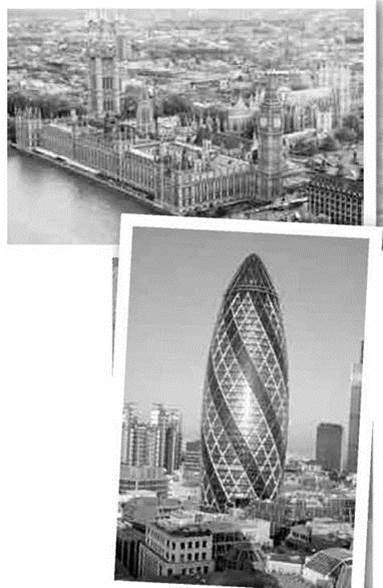
This huge building is th€ home of the British government1. Members of Parliament are also called MPs. People choose them in elections2 which take place every 4 to 5 years. The task of Parliament is to make laws3.
Big Ben is the name of the bell (13.7 tonnes) inside the Clock Tower which forms part of the Houses of Parliament.
Who is the British Prime Minister now? Who is the Ukrainian President?
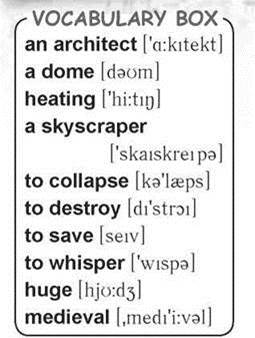
The Gherkin4 is one of the most famous high-rise buildings in London. It was designed by the famous British architect Norman Foster. You can see its top from far away. Some people say it looks like a rocket, but most people simply call it the Gherkin. It was built in such a way as to save energy, so the heating and cooling costs are not too high.
Do you know any other famous skyscrapers in the world?
1a government ['gᴧvnmәnt] — уряд
2elections [ı'lekʃn] — вибори
3 a law [Iɔ:] — закон
4a gherkin ['g3:rkın] — молодий огірок
The Millennium Bridge
The Millennium Bridge is a bridge over the River Thames.
People like walking over it because there is no traffic on it. It’s 144 m long. The bridge has got the nickname - ’Wobbly Bridge’. When it first opened in 2000, thousands of people who walked across felt a gentle movement underfoot. The bridge was closed, the problem fixed and it was reopened on 2 February 2002. In the film Harry Potter and the Half Blood Prince, Lord Voldemort's Death Eaters try to destroy the bridge and after some twisting, it collapses into the Thames. Iuckily, that was Just a film!
Have you seen the film Harry Potter and the Half BIood Prince?

2. Say if the statements are true or false.
Correct the false statements.
a St Paul’s is a medieval cathedral.
b St Paul’s Cathedral has got very bad acoustics.
c Sir Christmas Wren is the architect of the Millennium Bridge.
d MPs are the members of British Parliament.
e Big Ben is the name of the Clock Tower.
f Wobbly Bridge is a bridge over the River Thames.
g On 2 February 2002 the Millenium Bridge was destroyed.
h Norman Foster is an architect of the Millennium Bridge.
i The Gherkin is a nickname of one of the most famous high-rise buildings in London.
j The Gherkin was built in such a way that you can see its top from faraway.
k The Gherkin has a very high heating and cooling costs.
3. a) Read the following sentences and decide if they are true or false.
1 Tourists usually start their tour round Kyiv from Zoloti Vorota.
2 St1 Sophia Cathedral was the centre of learning and culture in Kyivan Rus.
3 The Statue of Bohdan Khmelnytsky is in front of St Michael’s Gold-Domed Monastery.
4 Apostol Andriy is a Kyiv’s patron saint2.
5 Andriyivsky Uzviz is one of the most popular places of interest.
6 Kievo-Pecherska Lavra has got a lot of caves3.
7 Nebesna Sotnya Alley is in Khreshchatyk Street.
8 Volodymyr the Great built the Paton Bridge.
9 Pyrohovo is one of the ’open-air’ museums.
b) Read and check if you were right.
KYIV
Kyiv was the capital of ancient Kyivan Rus. Zoloti Vorota was the main entrance to the city.
This is often the starting point of many tours round Kyiv.
St Sophia Cathedral was founded by Yaroslav the Wise in 1037. The cathedral was the centre of learning and culture in Kyivan Rus. Prince Yaroslav himself was buried4 here. There are many beautiful mosaics and frescos in the cathedral.
In front of the cathedral there is the Statue of Bohdan Khmelnytsky.
1St = saint [seınt] — святий
2a patron saint ['peıtrәn seınt] — святий покровитель
3a cave [keıv] — печера
4to be buried ['berıd] — бути похованим


St Michael’s Zolotoverkhyi Monastery, named after a Kyiv’s patron saint, shines with its beautiful golden domes on the other side of the square.
Andriyivsky Uzviz keeps its charm for the tourists.
The street is named after Apostol Andriy, who climbed the hill here. One who walks up ’the uzviz’ can see a wonderful St Andrew’s Church that was built in 1754 by Italian architect Bartelomeo Rastrelli.
Tourists and pilgrims shouldn’t ignore Kyivo-Pecherska Lavra with its numerous caves.
Maydan Nezalezhnosti is a fountain-filled square and the city’s most popular meeting place. It is known as the heart of Ukraine’s Orange Revolution of 2004 and the Revolution of Dignity of 2013-2014. All the streets in the centre seem to flow into Maidan Nezalezhnosti. One of them is the famous Nebesna Sotnya Alley with the monument to the heroes of the Revolution of Dignity, who gave their lives for the better future of Ukraine. Maydan Nezalezhnosti is next to Khreshchatyk, Kyiv’s main street of 1,5 km long.
On the hill of the square there is a path that leads to the House of Chimeras [kaı'mıәrәz] with its fairy animals. It was built at the start of the 20th century by the architect Vladyslav Horodetsky.
There is a huge building of the Presidential
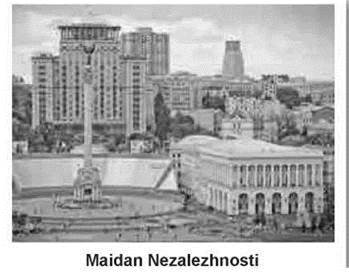

Administration not far from it as well as the Verkhovna Rada building, Mariyinsky Palace and the National Philarmonic.
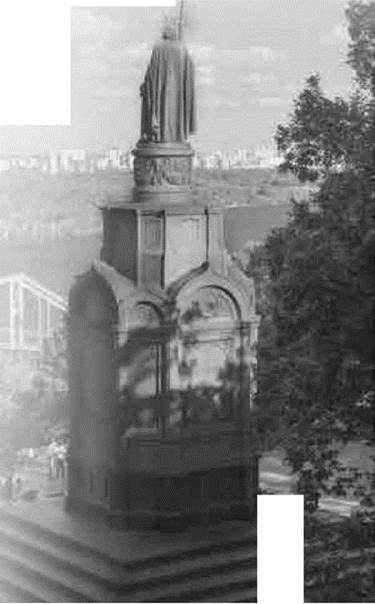
All the paths lead to the viewpoint looking down on the Statue of Volodymyr the Great, who brought Christianity to the eastern Slavs1 in 988.
Some of Kyiv’s attractions are really day-trip adventures. For example, the Pyrohiv, a Museum of Folk Architecture, that is 12 km south of Kyiv is worth seeing. This ’open-air’ museum is one of the best places.
Kyiv has become one of the most beautiful European cities. Parks and gardens cover one half of its territory. Kyiv’s monuments of the past look well among modern buildings, theatres, cinemas and trading centres. You can find yourself face-to face with many other places of interest in Kyiv.
1a slav [slɑ:v] — слов’янин


4. Fill in with the words from the box.
place of interest, famous, worth, founded, capital, architect, tours, monuments, cathedral, museums, statue
Kyiv was … 15 centures ago. It was the … of Kyivan Rus. Zoloti Vorota is often the starting point of many … round Kyiv. Saint Sophia … is the place where Prince Yaroslav was buried. There is a … of Bohdan Khmelnytsky in front of St Sophia. Andriyivsky Uzviz is another … in Kyiv. The wonderful St Andrew’s Church was built by Italian … Rastrelli. Maidan Nezalezhnosti is a … historical place. There are many … to visit in Kyiv. Pyrohovo Museum is a place … seeing. Kyiv’s … of the past look well among modern buildings.
5. Read the text in task 3 b) again and complete the sentences.
1 Kyiv was …
2 Zoloti Vorota was …
3 The St Sophia Cathedral was …
4 St Michael’s Monastery is named after …
5 Andriyivski Uzviz keeps its charm …
6 Tourists and pilgrims shouldn’t ignore …
7 Maidan Nezalezhnosti is …
8 The House of Chimeras was built …
9 Some of Kyiv’s main attractions are …
6. Work in a group.
Speak on the following:
• the past of the city
• the most popular places for sightseeing in Kyiv
• what Kyiv looks like today.
LISTENING
1. a) Listen and find the places that are mentioned on the map.
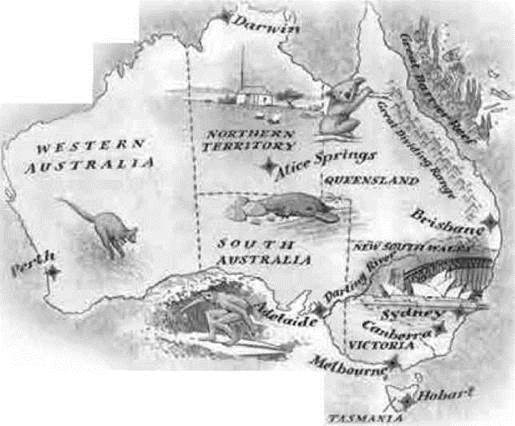
b) Listen again and answer the questions. Use the words from the box.
Brisbane, Brisbane Forest Park, Sea World, Night Wildlife Tour, Sydney Opera House, Ayers Rock, Great Barrier Reef

1 Who’s writing a letter?
2 Where did they go shopping yesterday?
3 What can you visit in Sydney?
4 What is in the middle of Australia?
5 What are the two most popular tourist attractions in Australia?
6 What do all tourists want to see?
7 What are they going to do today?
8 What are they going to do on Thursday?
2. Imagine you are in Australia now. Write a postcard. Use the questions.
• Who are you with?
• Are you having a lovely time?
• Is the weather good or bad?
• What did you do yesterday?
• What are you doing now?
• What are you going to do?
3. Listen to Suzie and Peter and number the places below in the order they mention them.

□ Big Ben |
□ Westminster Bridge |
□ the Houses of Parliament |
□ Wax Museum |
□ Madame Tussauds |
□ Millennium Wheel |
□ London Eye |
□ London taxi |

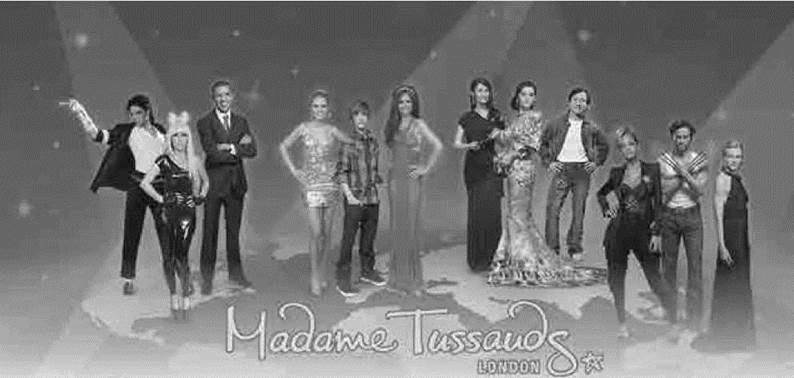
4. Listen again and complete the sentences.
1 I bet you’d like being in the company of some …
2 If you go to Madame Tussauds, you’ll see film … stars.
3 It’s a … wax museum, opened 200 years ago.
4 At Madame Tussauds you can take a … through the history of London.
5 You can witness all the important … in London’s history.
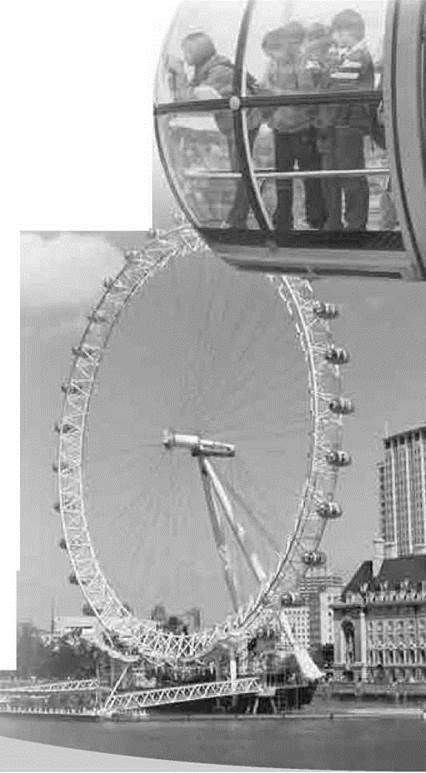
6 The London Eye is the largest … in Europe at a height of 135 metres.
7 The Eye is … Big Ben.
8 When you take a ride on the wheel, you’ll have a wonderful … over London.
DO YOU KNOW?
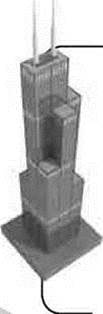
A GIANT OF A BUILDING
It reaches skyward like a mighty giant. It has 110 stories and is 1,454 feet (443 meters) high. This giant of a building is Sears Tower, in Chicago, Illinois. It is one of the tallest building in the world.
You can ride in one of two elevators that zoom up to the Skydeck on the 103rd floor. The trip takes less than a minute. From the observation deck, you can get a giant’s eyeview of Chicago and the surrounding area.
GRAMMAR
1 a) Read and compare.
Past Simple |
Past Continuous |
Past Perfect |
I did it yesterday. |
I was doing it when he came. |
I had done it before she came. |
b) Write the sentences using the verbs in brackets in Past Simple or Past Perfect.
1 My granny … that she … never … to London before. (to say, to be)
2 He … that he … his hat at the theatre. (to remember, to leave)
3 She … that she … a good sightseeing tour around London. (to write, to have)
4 The travellers … to the hotel, … their bags there and … for a walk in the town. (to come, to leave, to go)
5 Yesterday I … a letter from my friend, from whom I … not … for a long time. (to receive, to hear)
6 We … in yesterday’s newspaper that a group of doctors from Ukraine … to London to take part in a conference. (to read, to go)
2. Put a question to each sentence starting with the word in brackets.
Example: He had visited the Tate Gallery by that time. (What) What had he visited by that time?
1 She had shown us the central part of the city by 5 o’clock. (By what time)
2 She had bought all the things for dinner by 12 o’clock. (Had)
3 By that time they had seen most of the Tower of London. (Had)
4 By Saturday Martin had seen all the most popular places of interest in London. (By what time)
5 By 8 o’clock the daughter had prepared breakfast. (Who)
3. Make the right choice.
1 When we entered the hall, the music … loudly.
a) was playing
b) played
c) had played
2 My elder brother … school 3 years ago.
a) finishes
b) finished
c) had finished
3 Many years ago people … .
a) wore funny clothes
b) wear funny clothes
c) had worn funny clothes
4 When we got up, the sun … .
a) already rose
b) had already risen
c) has already risen
5 Before mother called us she … the table.
a) set
b) was setting
c) had set
6 I … home very early yesterday afternoon.
a) had come
b) was coming
c) came
7 While my friend …, I was watching the birds.
a) fished
b) had fished
c) was fishing
8 He said I … up the story myself.
a) made
b) make
c) had made
4. Complete the sentences opening the brackets.
1 When I opened the door, the lesson (to begin) … and the teacher (to explain) … something to the class.
2 I (to clean) … the carpet, when the dog (to come) … and (to shake) … himself.
3 When the bell rang, the children (to run) … into the classroom and (to take) … their seats.
4 We (to have) … a good long holiday after we (to do) … all the work.
5 Before we (to take) … the boy to the theatre, he (never to see) … a play.
6 By the time we (to arrive) …, the party (to finish) … .
7 When I (to get) … to the playground my friend … already (to leave) … so I (not to see) … him that day.
8 What you (to do) …, when I (to call) … you? I (to cook) … .
SPEAKING
1. Work in pairs. Ask and answer the questions.
a Where can you see the British Prime Minister?
b Which building has got the memorials of many famous men?
c What palace is the living place for the British Queen?
d Where would you go to see beautiful paintings?
e Which square in London is round?
f What building has got the famous clock tower?
2. a) Read and say which of the places Mary and Chris have visited.
Mary and Chris went on their sightseeing tour in London. They have done the following things.
• They have taken photos of themselves with the Prime Minister and Michael Jackson.
• They have seen the Queen’s crown.
• They have seen the memorial of Christopher Wren.
• They have seen the statue of Admiral Nelson.
b) What places haven’t they visited yet?
3. Work in groups of four.
Make a quiz about London
a) Write ten questions about things you’ve learned about London’s places of interest.
b) Exchange your quiz with another group. Answer their questions.
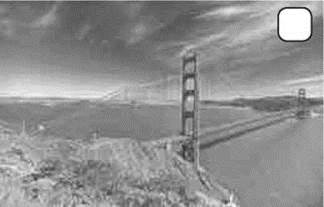
4. a) Read the texts. Match the name of each bridge with its text, then with a photo.
□ Tower Bridge
□ Paton Bridge
□ Golden Gate Bridge
□ Brooklyn Bridge
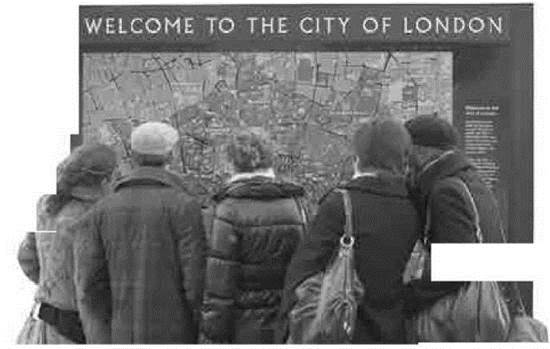
1 This bridge is the most famous bridge in London. It crosses the river Thames. It is close to the Tower of London, which gives it its name. The
bridge consists of two pieces which are lifted when a ship passes. Every year a lot of tourists visit this bridge.
2 This bridge is one of the bridges across the Dnieper in Kyiv, named after its constructor. It is the longest bridge in Kyiv having a length of 1,543 metres. There is traffic across the bridge. The bridge connects two banks of the river. The bridge is also a part of the Small Ring Road of Kyiv.
3 This bridge is a symbol of San Francisco. It was built in 1937. It crosses the San Francisco Bay. It is the most photographed bridge in the world. It is famous for its beautiful form and orange colour so you can see it even in the fog.
4 This bridge is one of the oldest bridges in the USA. It is in New York and it crosses the East River from Manhattan to Brooklyn. You can see this bridge in many films, for example in Godzilla and in video games such as SimCity.


b) Say what bridge each sentence refers to.
1 It is in San Francisco.
2 It is in Kyiv.
3 It is in New York.
4 It is in London.
5 It crosses the Thames River.
6 It connects two banks of the Dnieper River.
7 It crosses the East River.
8 It is famous for its orange colour.
5. Work in pairs. Choose one of the bridges. Describe it to your classmate. He / she guesses which bridge you described.
6. Work in pairs. Ask and answer the questions.
a Which bridge do you like best?
b Is there a bridge near the place you live?
c What is it made of?
d What does it cross?
e What does it connect?
7. a) Read the dialogue below. Say what places of interest
Nick’s friend is going to show Nick in New York.
SIGHTSEEING
— It would be nice of you to show me round New York by night. You know better what is worth seeing.
— Don’t worry about it. I’ll call in at 6 p.m. and take you sightseeing.
— OK. Agreed.
* * *
— We’ll start from Fifth Avenue.
— What is it famous for?
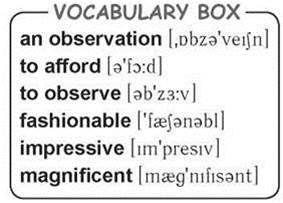
— It is one of the most fashionable streets in New York and there are a lot of expensive shops here.
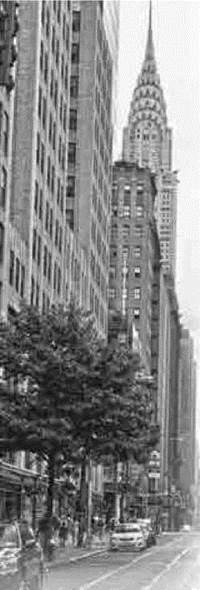
— And what is Times Square famous for?
— You can find a lot of theatres, cinemas and places of entertainment there.
— And could we see the Empire State Building, the tallest skyscraper in New York?
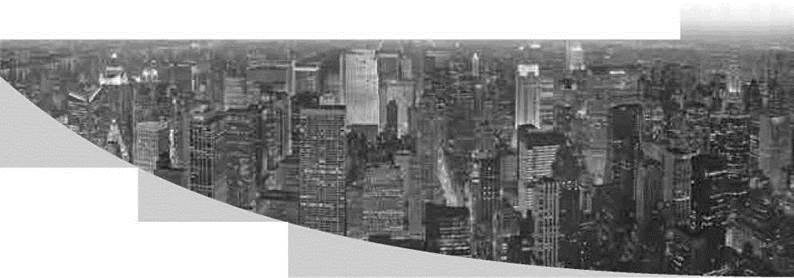
— Oh, we are just passing by. If you don’t mind we can get a view of New York by night from the observation platform of the Empire State Building.
— That would be nice. Yes, New York at night looks magnificent.
— You know, Nick, Rockefeller Centre is another sight worth of seeing tonight.
— And what museums are worth of visiting in New York?
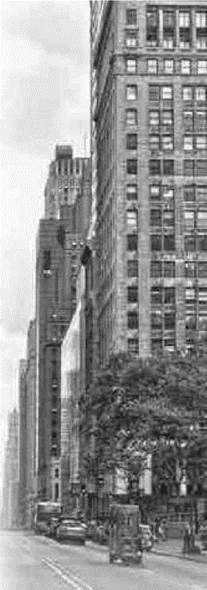
— First of all you should visit the famous Metropolitan Museum. Its collection of paintings is one of the richest in the world. And now we are going to see the Statue of Liberty.
— Oh, look! There are a lot of tourists!
— It’s not surprising. The statue is really impressive and we’ll take an elevator to the top of it. I am sure you’ll enjoy a wonderful sight of New York by night.
— Well, thank you so much for the trip. I am looking forward to getting to know New York better.
b) Work in pairs. Practise the dialogue and act it out.
8. Work in pairs.
Role-play the following situation.
The foreign guest visits the place where you live. Show him/her the places of interest and tell some historical facts.
WRITING
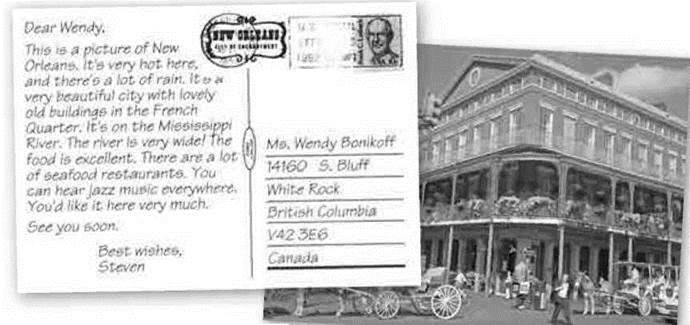
1. Look through the postcard. Write your own postcard to your pen friend about the town / city / country you like.
2. Write about some places of interest in Kyiv.
1 Find out some information about 2-3 famous ruins or buildings.
2 Write 4-5 sentences about each place of interest.
Use the questions below.
• What kind of building is it?
• Where is it?
• Who built it?
• How did they build it?
• What is it famous for?
LOOK BACK!
1. Complete the sentences.
1 We went on a … tour.
2 She … a lot of photos of some … old French villages.
3 You … go and look … the museums — they’re very interesting.
4 I … lost because I didn’t have a … .
5 We went to the … gallery to see those Picasso paintings.
6 We … on a tour of the centre and the … was interesting and funny.
2. Listen about the London Eye, then choose the right answer (a,b or c).
1 The London Eye is … metres high.
a) 120
b) 135
c) 140
2 It has … capsules.
a) 32
b) 30
c) 42
3 Each capsule can hold … people.
a) 5
b) 15
c) 25
4 It takes … minutes to make a full circle.
a) 20
b) 30
c) 40
5 You can choose to take a ride …
a) only by day
b) only by night
c) by day or by night
3. Listen and fill in the gaps.
SHAKESPEARE’S GLOBE
The building is not a very … one, but it is a … of the original Globe, a theatre where people of the … century watched Shakespeare’s plays. William Shakespeare was one of the most famous English … and was … in Stratford-upon-Avon.
A lot of people at that time………. his plays but went to see them at the theatre. The Globe Theatre was … and made of … Rich people had … to sit on, while poor people … in the open air in the middle. People … and … during the performance or laughed and shouted at the … . The actors were only … , and … played the women’s roles.
4. Work in pairs. Make your own sightseeing tour and visit two of the places in London.

a) Choose the places and find information about them.
b) Describe two places that you have seen, but don’t name them. Give your information to another pair. They must guess where you have been.
5. a) Read the text quickly and answer the questions.
1 Is Bella a typical popular girl?
2 Is Edward different from the other boys in his school?
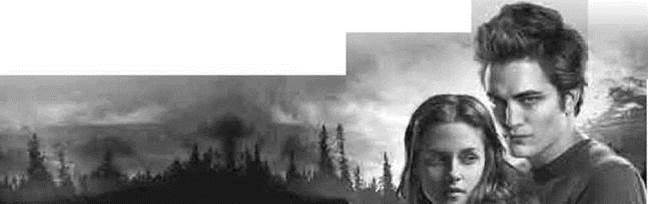
Bella Swan has always been a little different from other kids at her school. She never really cared about fitting in with the trendy girls at her high school in Phoenix, Arizona. When her mother remarries, Bella decides to live with her father in Rainy Forks, a little town in Washington.
She doesn’t expect her life to change a lot in her new school but it does change when she meets the mysterious and good-looking Edward. She has never met anyone like him. He’s very intelligent and witty. He’s also trying hard to hide his secret. Very soon they fall in love but it’s a bit like a Romeo and Juliet story. They shouldn’t be together. Their family and friends will try to separate them.
Edward Cullen is not an ordinary boy. He has some superhuman powers. He can stop a car with his bare hands and he can run faster than any other human being. He also hasn’t grown any older since 1918 because he’s immortal. Just like all other vampires. Yes, he is a vampire but a different sort of vampire. He and his family don’t drink human blood. When he sees Bella, he realises that he has waited all his life for such a creature. He has finally found his true soul mate.
The reason why he tries to avoid Bella at first is because he is afraid that he might harm her.
b) Are these sentences true or false?
1 Bella has always been different from other kids at school.
2 Her life doesn’t change in her new school.
3 She has met boys like Edward before.
4 Edward has a secret that he is trying to hide.
5 He can do things that other people can’t.
6 He is immortal.
7 He tries to avoid Bella at first.
8 Their family and friends want them to be together.
6. Work in pairs. Speak on the following.
1 How many films about vampires have you seen so far?
2 Why do you think the films about vampires are so popular?
3 Who is the best-known vampire?
4 Where is he from?
5 What do we know about vampires (although we don’t really believe they exist)?
6 Here are some things that are associated with vampires.
Can you explain why? (sunlight, mirror, garlic, cross, coffins)
7 What other spooky creatures appear in horror films?
8 Were you afraid to watch horror films when you were younger?
9 What’s the best horror film you’ve ever seen?
10 What’s it about?
7. Write a letter about your visit to the theatre / cinema. Share your impressions of the play / film you were watching there.
8. Work in pairs. Ask and answer the questions.
1 Have you ever acted in a play?
2 What was the performance like?
3 Have you had a stage fright1?
4 Were the actors excited and why (or why not)?
5 What things did the actors have to do before the performance?
6 Who made the scenery and brought all the necessary things?
7 Did the audience like your performance?
8 How did they show that they were pleased (not pleased)?
9 Did you enjoy the performance from the beginning to the end?
1a stage fright [frait] — страх перед виступом на сцені
9. Number the sentences to make up a dialogue.
— A comedy.
— Who is your companion?
— Of course, you can. We can try to get an extra ticket at the theatre door.
— I am going out tonight. I’ve got two tickets to the Musical Theatre.
— My elder sister is. She always enjoys a good laugh.
— OK. Let’s meet outside the theatre near the entrance door.
— Fine! I am going to join you! See you tonight at 6:30!
— Oh, is it possible to join you? I haven’t been to the theatre for ages. But, I have a guest visiting me.
— What’s on?
— Good. Looking forward to seeing you.
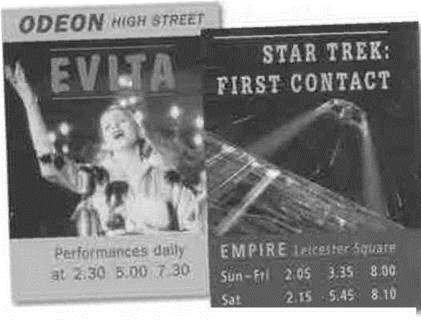
10. Work in pairs. Role-play the situation. Use these posters.
You are inviting a friend to a theatre / cinema. Tell him / her:
• what theatre / cinema you will visit;
• what will be shown there;
• where and when you will meet.
11. Read about some attractions in Canada and say which one you’d like to visit.
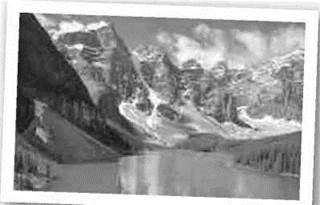
THE ROCKY MOUNTAINS
This famous mountain range is a favorite getaway in winter or summer. It’s great for hiking, mountain climbing, fishing, skiing and contains two beautiful National Parks — Jasper and Banff. Many winter events were held here during the 1988 Calgary Winter Olympics.
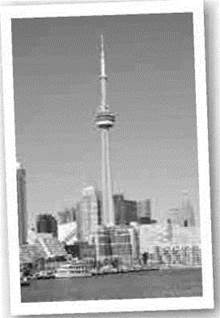
THE CN TOWER
This famous tower in Toronto is the largest free-standing structure in the world. Take an elevator up to the top, sightsee, eat a meal in the restaurant, and enjoy the view!
KITCHENER OKTOBERFEST
Join the German celebration and drink beer, eat lots of food, sing and dance — almost as good as being in Germany!
THE CALGARY STAMPEDE
Yahoo! Grab your cowboy boots and hat and join the real cowboys at the world’s largest outdoor rodeo! Chuckwagon races, calf-roping and other rodeo events are exciting and fun for everyone. You can also enjoy the large fair, take a ride on a rollercoaster, try bungeejumping, listen to live entertainment and buy authentic souvenirs. If you get up early, you can hit one of the free pancake and sausage breakfasts every morning!

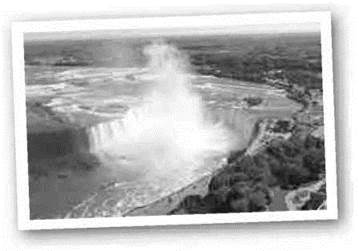
NIAGARA FALLS
These powerful falls are known as the Honeymoon Capital of the World. Tourists can actually stand under the falls and feel the spray on their faces. Or, maybe, if you’re lucky, you can watch a dare-devil try to go over the falls in a barrel!
WEST EDMONTON MALL
Attention Shoppers! The West Ed Mall is for you — it has absolutely everything you want, all under one roof! Four levels of shopping, fair rides, a skating rink, waterslides, bungee-jumping, cinemas, hotels, bars and casinos will keep you busy for days!
DRUMHELLER DINOSAUR PARK
Dinosaur lovers will enjoy the town, park, and museum built in the Drumheller Canyon Wander around the area where dinosaurs roamed centuries ago, or take part in an archeological dig.

12. Work in a group. Spend your week in Canada and share your traveller’s experience with others.
FILE FOR PROJECT
1 Think what you’d like to see and do. Plan your holiday from Day 1 to Day 5.
2 Imagine the week has passed. Write the diary of your trip. Think of what happened.
3 Pass your diary round the class, read the other diaries and choose the holiday you like best.
READING 4 FUN
1. Read about William Shakespeare’s life and answer the questions below.
W. Shakespeare was born on April 23, 1564 in Stratford- upon-Avon. His father was a glove-maker. William went to a grammar school and had a good education. There he learned to love reading.
William married when he was still a teenager. His wife, Anne Hathaway, was several years older than him. He carved his living helping his father in the family business. William had three children when he left for London in 1587. Some people say that the reason he left his wife and children was his love to poetry and theatre.
In London Shakespeare began to act and to write plays and soon became an important member of a well-known acting company. Most of his plays were performed in the Globe Theatre, built on the bank of the River Thames. In 1613 he stopped writing and went back to live in Stratford where he died in 1616.
His plays are still acted not only in England but on the stages of many theatres of the world.
• When was W. Shakespeare born?
• What is his birthplace?
• Was his father a farmer?
• Did William have a family?
• How long had he lived in London?
• Where did he die?
• Why did he become famous?

2. Listen and read.
THE ACTORS COME TO TOWN
(from the book ’W. Shakespeare’ after Jennifer Basset)
The story is told by William Shakespeare’s friend, Toby.
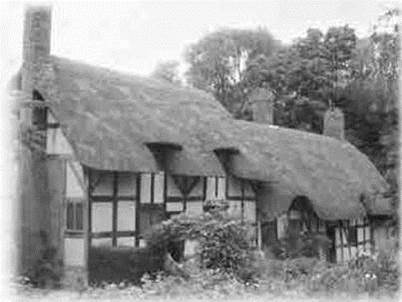
William married Anne Hathaway in November and she came to live in Henley Street. Will was only eighteen.
Susannah was born the next year. All babies look the same to me and Will was very pleased with her.
«Look, Toby, she’s got my eyes,» he said happily. «She’s going to be as beautiful as Queen of Egypt and as clever as King Solomon.»
«Oh yes!» I said. «All parents talk like that about their children.»
Soon in February 1585 I hurried round to Henley Street to hear the news. Will came running down the stairs.
«It’s two of them!» he said. «Twins! A girl and a boy. Isn’t that wonderful!» Will called the twins1 Hamnet and Judith ['d3u:diӨ].
Will was still reading and writing but he had changed. He was twenty-three at that moment and he was not happy with his life.
«Stratford’s too small, Toby,» he said.
«Too slow. Too quiet.
Too boring. I’ve got to get away.»
1twins [twinz] — близнюки
«Yes, but how?» I asked.
«You’ve got a family — three young children, remember.»
He didn’t answer.
In the summer months companies of players often came to small towns. Will and I always went to see the plays. Will loved to talk to the actors and to listen to all their stories of London.
One evening I walked into the Shakespeare’s kitchen and saw Anne with a red, angry face, shouting at the top of her voice.
«How can you do this to me? And what about the children?» Then she saw me and stopped.
Will was sitting at the table and looked pleased to see me. «I’ve told Anne,» he said quietly, «that I’m going to live in London. I want to be an actor and to write plays if I can.» «Plays!» screamed1 Anne. «Acting! Actors are dirty, wicked people! They’re all thieves2 and criminals3! They drink all day and they never go to church…»
«Don’t be stupid, Anne. You know that’s not true. Listen. I’ll come home when I can but I must go to London. I can’t do anything in Stratford.» He looked at me across the room. «Are you coming with me, Toby?»
«How soon shall we start?» I asked.
3. Find out and read the following passages.
a William as a happy married man.
b Will had changed his views.
c A quarrel between Will and his wife.
d Will’s decision.
1to scream [skrı:m] — кричати, репетувати
2a thief [Өi:f] — злодій
3a criminal ['krımınәl] — злочинець
4. Say if it is true or false.
1 Shakespeare was born in the 15th century.
2 Shakespeare’s father was a glove-maker.
3 William was badly educated.
4 Will went to work to London.
5 Shakespeare wrote plays for Royal Opera.
6 Shakespeare never acted on the stage.
7 Shakespeare lived in Stratford during the last years of his life.
8 Plays by Shakespeare are famous all over the world.
5. Speak about Shakespeare’s married life.
Make the story as if you were Will.
6. Read the list of the most famous plays written by Shakespeare.
a) Say if you have heard anything about some of them.
1593 "The Comedy of Errors
1595 "Romeo and Juliet» ['re mıәƱ en 'd
 u:Ijәt]
1596 "A Midsummer Night’s Dream»
1597 "The Merchant1 of Venice»
1599 "Julius Caesar»
1600 "As You Like It»
1600 "Twelfth Night»
1601 "Hamlet»
1603 "All’s Well That Ends Well»
1604 "Othello» [әƱ'ӨelәƱ]
1606 "King Lear» [lı ]
]
1606 "Macbeth» [mak'beӨ]
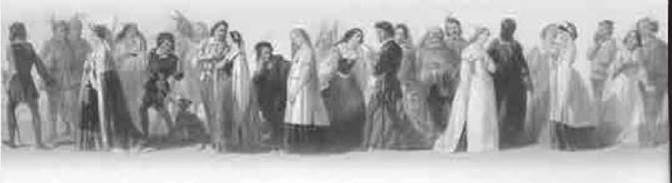
b) Guess which of the plays are comedies and which of them are tragedies2.
1a merchant ['m3:tʃnt] — купець
2a tragedy ['trædʒıdi] — трагедія
My Learning Diary

The topics of this unit are
I find this unit very easy /quite easy /quite difficult / very difficult. (Underline what is true for you)
I think that the most important thing I have learnt is …
The most difficult thing for me was
The things that I enjoyed most in the Unit were
The things that I didn’t enjoy were
The ways I used working with the Unit were
My favourite activities / tasks were
The new grammar I have learnt in the Unit are
The best lesson I had in my English class was
The things that are easy to read are
The things that are easy to listen to …
The things that are easy to talk about …
The things that are easy to write about …
The things that are difficult to read about …
The things that are difficult to listen to …
The things that are difficult to talk about …
The things that are difficult to write about …
Three things I would like to remember from this unit are
… because …
I would like to improve my pronunciation /spelling / vocabulary / grammar/fluency. (Underline what is true for you.)
The things that I would like to learn are …
How confident do you feel now about your own English? What areas seem to have improved a lot?
Are there any things which you don’t understand very well and would like to study again?
After the unit I can:
NOW I CAN |
|||
• name different types of films |
|||
• understand a film review |
|||
• understand a guide book |
|||
• understand smb’s biography |
|||
• understand and use the past tenses of the verbs |
|||
• understand and use the reflexive pronouns |
|||
• describe an atmosphere inside the theatre |
|||
• speak about acting in a performance |
|||
• describe a film |
|||
• describe a landmark |
|||
• speak on the plot of a film / play |
|||
• share my travelling experience |
|||
• ask and answer about smb’s impressions of a film / play |
|||
• ask and answer about a place of interest |
|||
• express my opinion about a film / a performance |
|||
• suggest going to the cinema / theatre |
|||
• give recommendations to watch a film / see a performance |
|||
• conduct a sightseeing tour |
|||
• make a quiz about a city / country |
|||
• write a short film review |
|||
• write a postcard about a place of stay |
|||
• write a diary about my trip |
|||
MY WORK |
Перша публікація: 01/01/2015
Останнє оновлення: 31/12/2023
Редакційна та навчальна адаптація: Даний матеріал зведено на основі першоджерела/оригінального тексту. Команда проєкту здійснила редакційне оглядове опрацювання, виправлення технічних неточностей, структурування розділів та адаптацію змісту до навчального формату.
Що було опрацьовано:
- усунення форматних дефектів (OCR-помилки, розриви структури, дефектні символи);
- редакційне упорядкування змісту;
- уніфікація термінів відповідно до академічних джерел;
- перевірка відповідності фактичних тверджень тексту першоджерела.
Усі згадки про автора, рік видання та походження первинного тексту збережено відповідно до джерела.