Англійська мова 3 клас
Unit 7 Daily Life
Lesson 9
1. Choose and complete.
1. I … at 7 o’clock in the morning.
A get up B have dinner C read a book
2. I … at 7.30 in the morning.
A do my homework B have breakfast
C have lessons
3. My…….. at 8.30 in the morning.
A lessons begin B mum cooks supper
C lessons are over
4. I … at 3 o’clock in the afternoon.
A make my bed B go to bed C come back home
2. Ask and answer.
1. What time did you get up yesterday?
2. What did you do in the morning?
3. What did you do in the afternoon?
4. What time did you go to bed?
3. a) Fill in was, were.
1. She … at the playground last Sunday.
2. I … not at the party last month.
3. Where . you at 6 o’clock yesterday?
4. Where … Tom and Kim yesterday?
b) Fill in wasn’t, weren’t.
1. My friends … at the cinema last Tuesday.
2. I … at the Zoo yesterday.
3. Alex … in the village last summer.
4. You … at the theatre yesterday.
4. Look at the pictures. Ask and answer the questions as in the example.
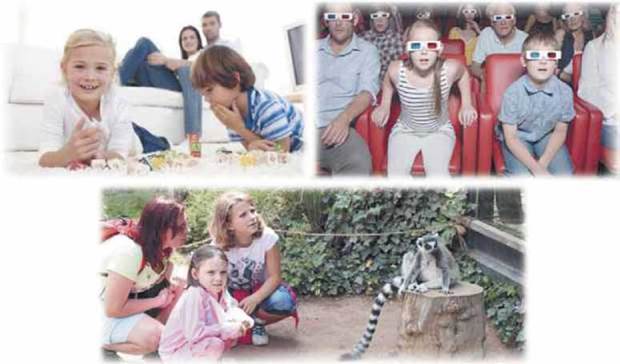
Example: Ann and Dan / at the beach / Sunday?
Were Ann and Dan at the beach on Sunday? - No, they weren’t.
They were at home. Dan played computer games. Ann read a book.
1. John / at the circus / yesterday? - No, he wasn’t. He was at the … yesterday. He … a new film.
2. The children / at the Zoo / Saturday? - Yes, they … . They on Saturday . They watched animals.
3. You / in the village / at the weekend? - Yes, … . / No, … . I … . I … and … .
5. Project Work. Make a poster about your working day (weekend). Start like this:
It was … yesterday. I got up at … . I … . Then I…………
Перша публікація: 01/01/2013
Останнє оновлення: 31/12/2023
Редакційна та навчальна адаптація: Даний матеріал зведено на основі першоджерела/оригінального тексту. Команда проєкту здійснила редакційне оглядове опрацювання, виправлення технічних неточностей, структурування розділів та адаптацію змісту до навчального формату.
Що було опрацьовано:
- усунення форматних дефектів (OCR-помилки, розриви структури, дефектні символи);
- редакційне упорядкування змісту;
- уніфікація термінів відповідно до академічних джерел;
- перевірка відповідності фактичних тверджень тексту першоджерела.
Усі згадки про автора, рік видання та походження первинного тексту збережено відповідно до джерела.